Scenario 1: Track overdue invoices
YouWhich invoices are overdue?

Accounting agentOverdue invoices listed, reminders ready for your approval.
AI agents · Accounting agent
It matches your invoices to your bank, prepares overdue-payment reminders and the file for your accountant. You approve every reminder.
30 minutes to scope your agent with you.

Concrete use cases
Scenario 1: Track overdue invoices
YouWhich invoices are overdue?
Accounting agentOverdue invoices listed, reminders ready for your approval.
Scenario 2: Prepare the accounting file
YouPrepare the file for my accountant.
Accounting agentThis month's file is ready, missing documents requested once you agree.
Scenario 3: Spot anomalies
YouAre there any anomalies?
Accounting agentDuplicates and amount discrepancies flagged, with the source document.
1 / 3
AI invoice processing means an agent collects your invoices and receipts where they arrive, reads the key fields, suggests the match with your bank lines, requests missing documents and prepares the monthly file for your accountant. At Équipage IA, the agent pays nothing, posts no final entry and signs nothing: you approve every reminder and every request, and your accountant keeps and reviews the books. We scope and set up this agent for companies of 5 to 50 people, starting with a discovery audit.
It takes the repetitive part of the work between a document arriving and it reaching your accountant. In a small company without a finance team, that work often falls on the owner or one person, at month-end. The agent reads the connected inboxes and the bank every day, files each document in one place, spots what is missing and prepares the requests. It only comes to you for a decision: an invoice it cannot find, an amount that does not match, a supplier whose bank details changed. Your relationship with the accountant stays the same: you send a more complete file, earlier.
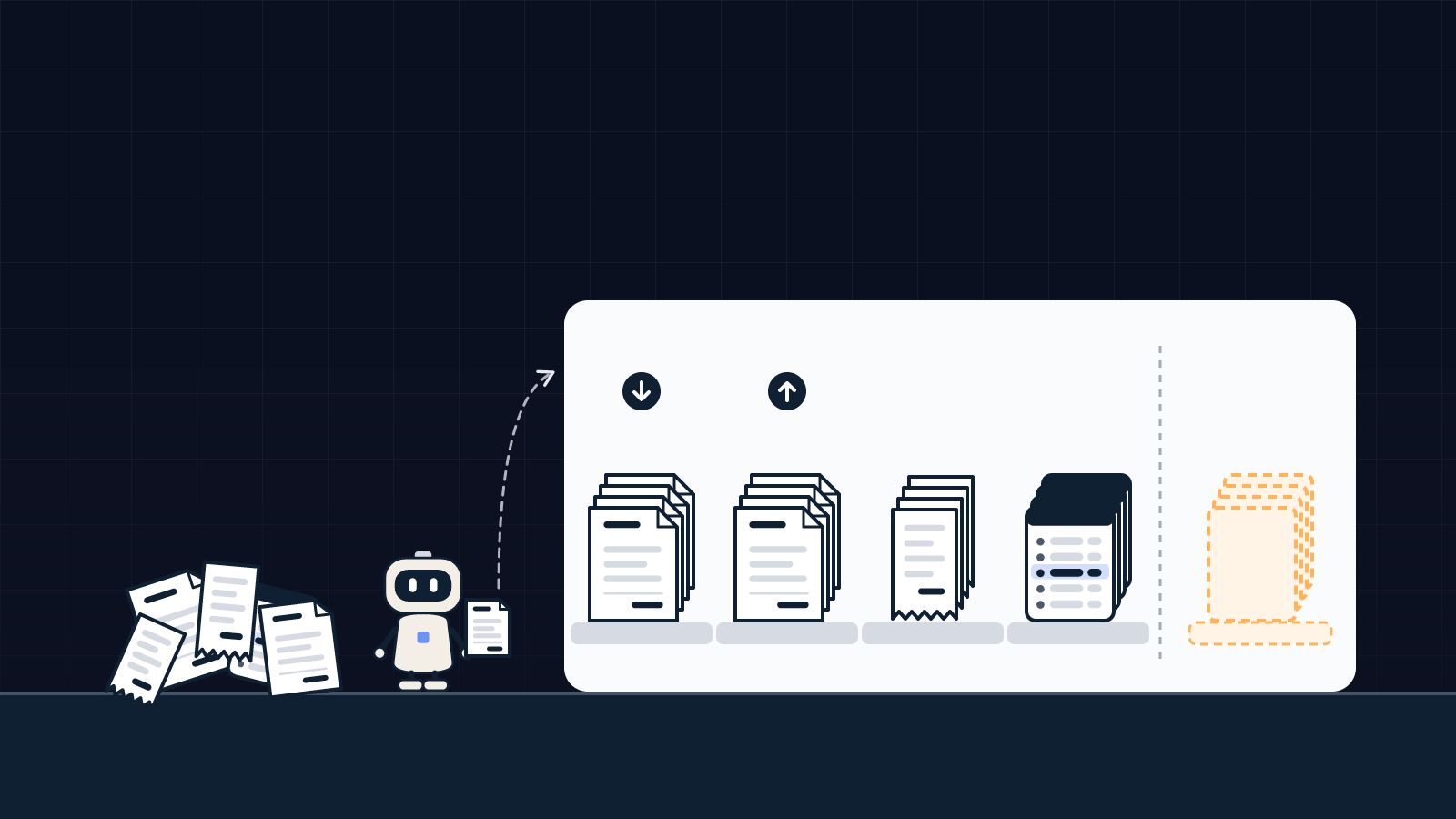
The line is drawn document by document during scoping. Here is the one we suggest by default.
| Document | The agent | You or your accountant |
|---|---|---|
| Supplier invoices | Finds them in emails, reads supplier, dates, amounts and VAT, flags duplicates and bank detail changes | Settle each discrepancy, decide each payment |
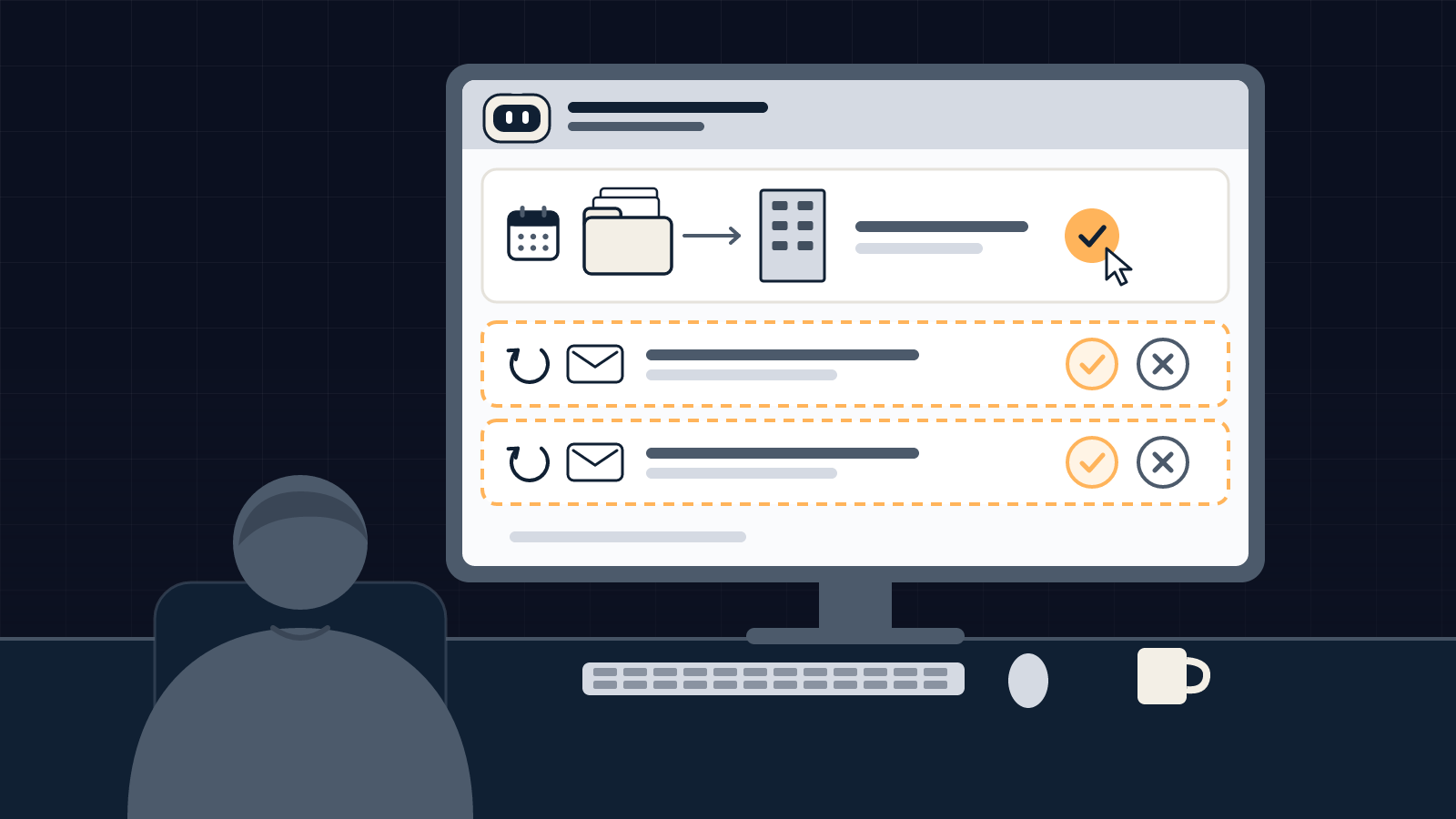
| Customer invoices and late payments | Lists overdue invoices, prepares reminders | Read and approve each reminder before it goes |
| Expense receipts | Links receipts and expense claims to debits, lists the missing ones | Provide the receipt or decide how to treat it |
| Bank statements | Suggests the link between each line and its document | Confirm; the accountant reviews |
| Monthly file | Assembles documents and the list of gaps for the accountant | Approve sending it |
All of it. In France, keeping or reviewing the books of a company you do not work for is reserved for chartered accountants (experts-comptables). The agent works upstream: it prepares documents and suggestions, and the accountant posts and checks the entries. We cover this in our article AI accounting agent: what to hand over, what to keep. During scoping, we ask your accountant how they want to receive the file, so the agent prepares it in that format. Are you an accounting firm yourself? Our page on AI agents for accounting firms in Paris covers what the agent prepares on the firm's side.
We run an admin agent on Équipage IA's own documents. From 9 to 20 October 2026, over 8 runs, it looked for the supporting document of every debit on our account since 1 September. At the last run, 21 debits still had no document: 10 were bank fees with no line-by-line invoice, and the other invoices had not arrived by email and sat in the supplier's customer portal. The agent did not fill these gaps for us. It kept the list current at each run and set out a clear decision for each line. This is the first thing we look at during the audit: where your documents really arrive, and what can be connected.
It changes how part of your invoices arrive. Since 1 September 2026, every VAT-registered business in France must be able to receive electronic invoices through an approved platform; the obligation to issue them applies to small and micro businesses from 1 September 2027 (Service Public Entreprendre, sheet F23208, read on 21/10/2026). The agent works from what the platform receives and from your other sources: email, supplier portals, bank, receipts. Choosing the platform is up to you and your accountant.
Before connecting your bank, read our article on the access to give an AI agent. If accounting is not your first priority, our page on AI agents for small businesses: where to start helps you choose the task.
Documents filed as the month goes, and a short list of decisions instead of a month-end to rebuild.
Your questions
We do not set it up that way. It reminds you of due dates and prepares the list of invoices to pay; payment stays the owner's decision, made in the bank.
Not necessarily. The agent uses what you already have: inbox, bank, invoicing software, e-invoicing platform. The audit tells you if a piece is missing.
No. It prepares each reminder; you read and approve it before it goes.
It flags it instead of guessing: the doubtful field, the missing document or the amount discrepancy lands in your decision list, with the source document.