AI audit · No commitment
AI audit for business: find the one task worth handing to AI, and the ones to keep
- An eight-page report, sent by email
- Four fields, one minute, free
- No access to your tools
- No commitment: the conclusion can be that nothing is worth building
An AI audit for a small business answers one question: which task in your company deserves an AI agent or an automation, and which one is not worth it. Équipage IA offers it in two forms, with no commitment. The remote audit: you give us your website and the task that weighs on you, our agent reads your public pages and emails you an eight-page report. The discovery audit: 20 to 30 minutes with Hakim, the founder, on one specific task. Neither asks for access to your tools, and either can conclude that nothing is worth building.
Book a discovery auditYour audit
How do I get my audit?
What is an AI audit for business?
It is a short review of how your team works, done to decide where AI helps and where it does not. It starts from a real task: answering requests, following up quotes, filing accounting documents, sorting the inbox. We look at where the information comes from, which tools it passes through, who decides at each step, and what repeats. The verdict has three possible outcomes: a fixed-rule automation is enough, an AI agent is useful because the task requires reading and writing, or nothing is worth building. For a company of 5 to 50 people, the point is to pick a first task, not to inventory the whole business.
What are the two AI audit formats at Équipage IA?
| Remote audit | Discovery audit | |
|---|---|---|
| Format | Four-field form, then an eight-page PDF report by email | A 20 to 30 minute conversation, by video call or on site in the Paris region |
| What you provide | Your website and contact details; if you like, your industry and the task that weighs on you | One task, your current tools, the decisions that must stay with a person |
| Who does it | Our agent, from your public pages and your answers | Hakim, with you |
| What you receive | Opportunities, an order of magnitude, five companies to prospect, a roadmap | A written verdict: fixed rules, AI agent, or nothing to build |
| Access to your tools | None | None |
The two work together: the report helps you prepare the conversation, and the conversation settles things with your own figures.
What is in the eight-page report?
The report is written for your business, from what your public pages say about your activity and the task you describe. It takes a few minutes to read and has four parts.
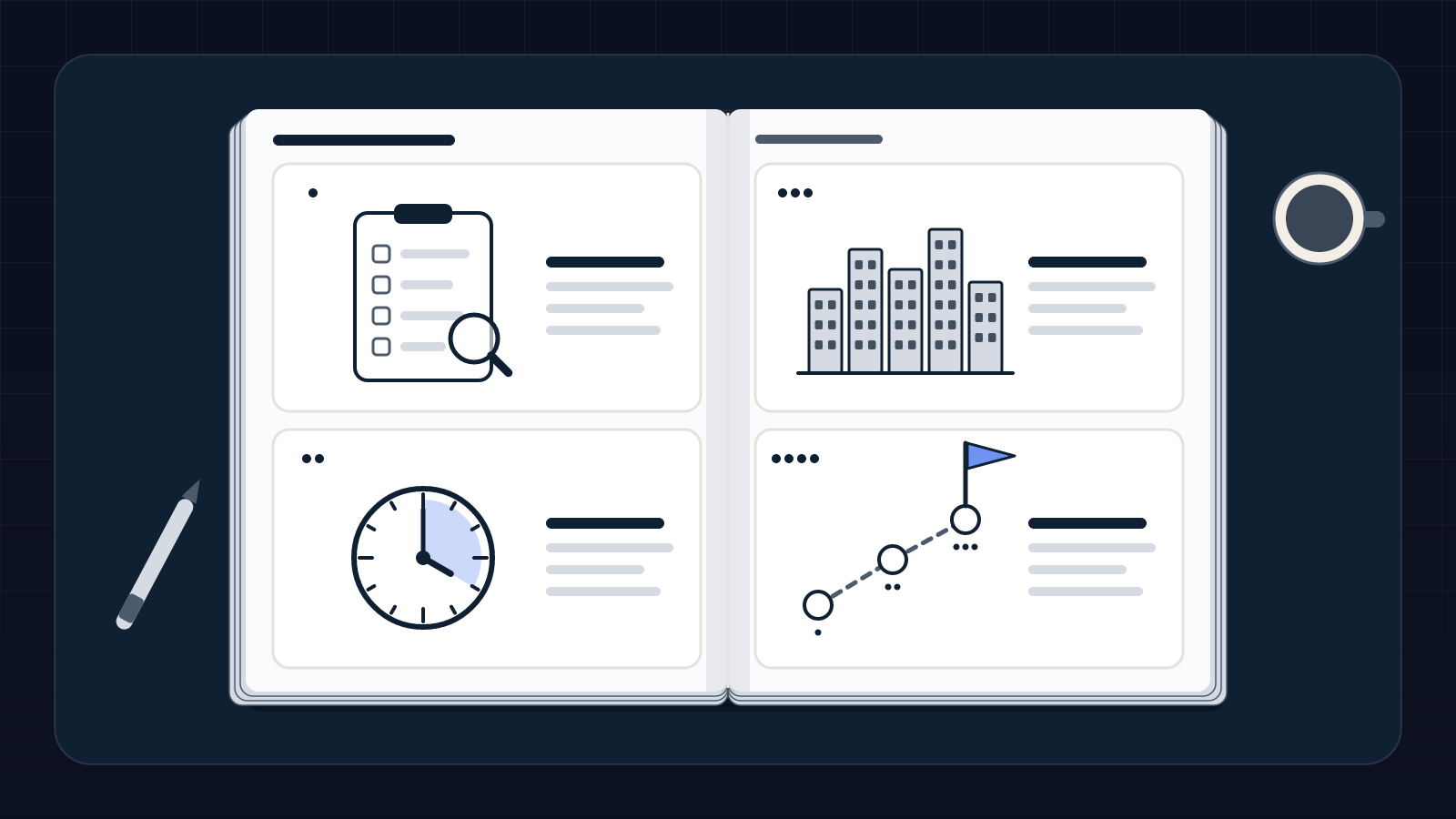
- The tasks to examine first. The repetitive steps an agent or an automation could prepare in your business.
- The time at stake, with no promised figure. For each opportunity, an order of magnitude with its written assumptions, to check together.
- Five companies you could prospect. Companies whose activity matches what you sell, with the reason for each choice. A starting point, not a contact list.
- A roadmap. What to start with, what can wait, what your team should prepare.
How does the remote AI audit work?
Four steps, no meeting to schedule:
- You fill in the form: four fields, one minute, then a few optional choices.
- Our agent reads the public content of your pages, nothing else.
- It writes the eight-page report.
- The PDF lands in your inbox.
Équipage IA runs its own agents for its prospecting, its content and its paperwork before offering them to a client. The report comes from the same way of working: an agent prepares, a person keeps the decision.
What does this audit not do?
It does not look at your internal data or your software: it starts from public information and your answers. It is not a compliance audit, nor a maturity study of the whole company. The report is drafted by an AI model and can contain approximations; its orders of magnitude are assumptions, not commitments. It opens the discussion and helps you pick a first task. The decision stays yours.
AI audit, scoping, first system: what is the difference?
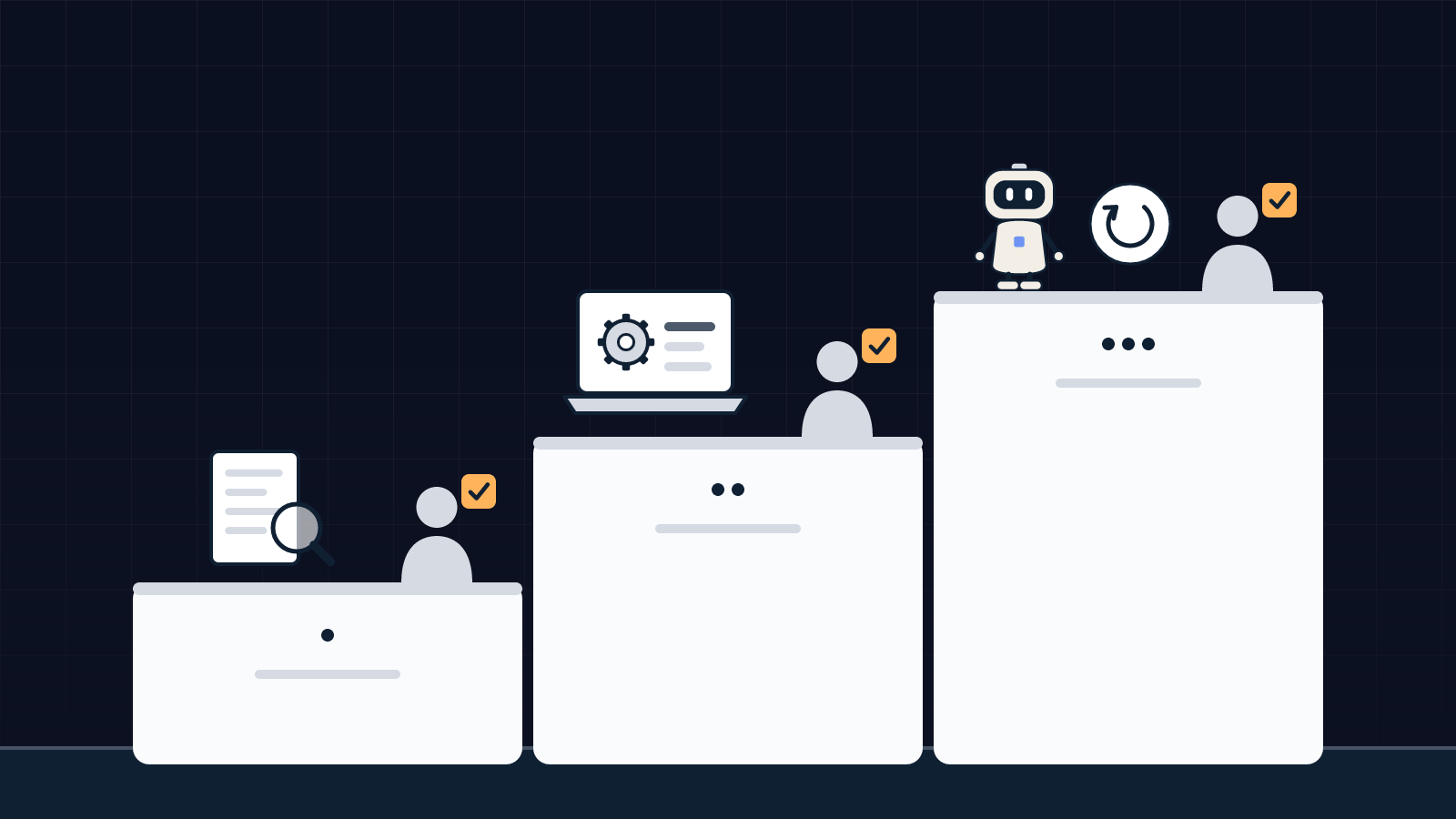
The audit is the first step, with no commitment. If the need fits one clear process, we can move straight to building it. If it goes beyond the task examined, we suggest a scoping engagement: a paid two-week assignment, run with you inside your tools, that maps the processes, the bottlenecks measured with your own figures, the priorities and the human approval rules. Then comes the first system, on a single process, delivered in two to three weeks. Terms are on our offers page.
To choose the task to bring, our page on AI agents for small businesses: where to start gives examples. If you are unsure between a chat tool and an agent that works inside your software, read AI assistant or AI agent: which one for which task. Before connecting anything, our article on the access to give an AI agent sets out three questions to answer.
Questions
Frequently asked questions
Why do you require a business email?+
The audit concerns a business. A company address confirms the request comes from it and limits automated requests.
Who writes the report?+
An AI model, from your public website content and your answers. It can contain approximations: it is there to open the discussion.
Do I need to give access to my tools?+
No. Neither the remote audit nor the discovery audit requires access. Access is only discussed at the scoping stage, and you enter it yourself in your own workspace.
Can the audit conclude there is nothing to automate?+
Yes. It is one of the three possible outcomes, and the report says so when it applies.
What happens next?+
You receive the report, then no more than four follow-up emails over ten days, each with an unsubscribe link. If an opportunity interests you, you book a 30-minute call.
Is the audit enough to start a project?+
Not always. It helps you choose the task. When the need goes beyond a single process, the scoping engagement, run with you inside your tools, comes before any build.
Would you rather discuss it directly?
Thirty minutes with Hakim to review your situation, by video call, with no commitment.