Chatbots and AI agents · Paris

AI chatbot agency in Paris: answer your customers without sending anything wrong

Équipage IA designs and installs AI chatbots and agents for Paris small businesses with five to fifty employees whose customer enquiries come in through the website, by email or through a form. The system reads the enquiry, finds the information in your documents and tools, and drafts the reply; a person on your team approves anything that commits the company. If a well-kept FAQ page is enough, we tell you so. Everything starts with a 20 to 30 minute discovery audit, at your Paris office (no travel charge) or by video, with no commitment.

Twenty to thirty minutes. No commitment.

Where do your customer enquiries actually come from?

Count your channels before you pick a chatbot. A chat window on your website only sees the visitors who open it. In many service businesses, the enquiry that matters arrives somewhere else: an email to the contact address, a quote request form, a message forwarded by a partner.
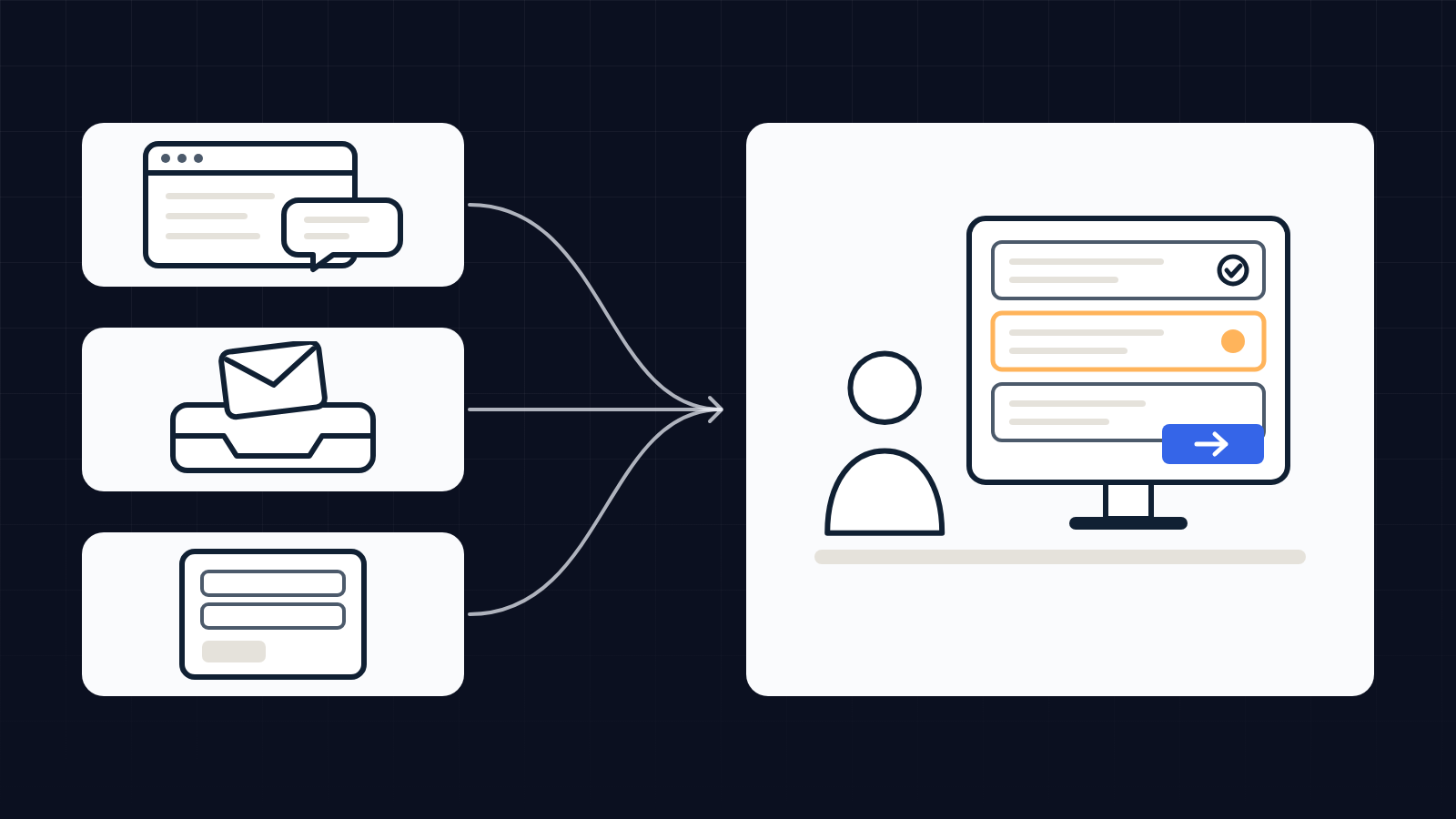
Three channels of customer enquiries for a small business, website chat, email inbox and web form, converging on one desk where a person reviews the drafted replies.

On 11 October 2026 we read, in full, six chatbot service pages for Paris, published by five providers and found on the first page of Google France for "agence chatbot paris" and "chatbot paris entreprise". All of them talk about the website, WhatsApp or an internal assistant. None treats email as a channel where customer enquiries arrive. For a consultancy, an engineering office or a trade distributor, it is often the main one.

So our first question in the audit is simple: over the last thirty days, how many enquiries per channel, and how many waited more than a day for an answer? If almost everything comes by email, a chatbot on the website will change very little. You need an agent that reads the inbox, which is what our enquiries and quotes agent page describes.

Chatbot on its own, or replies approved by a person?

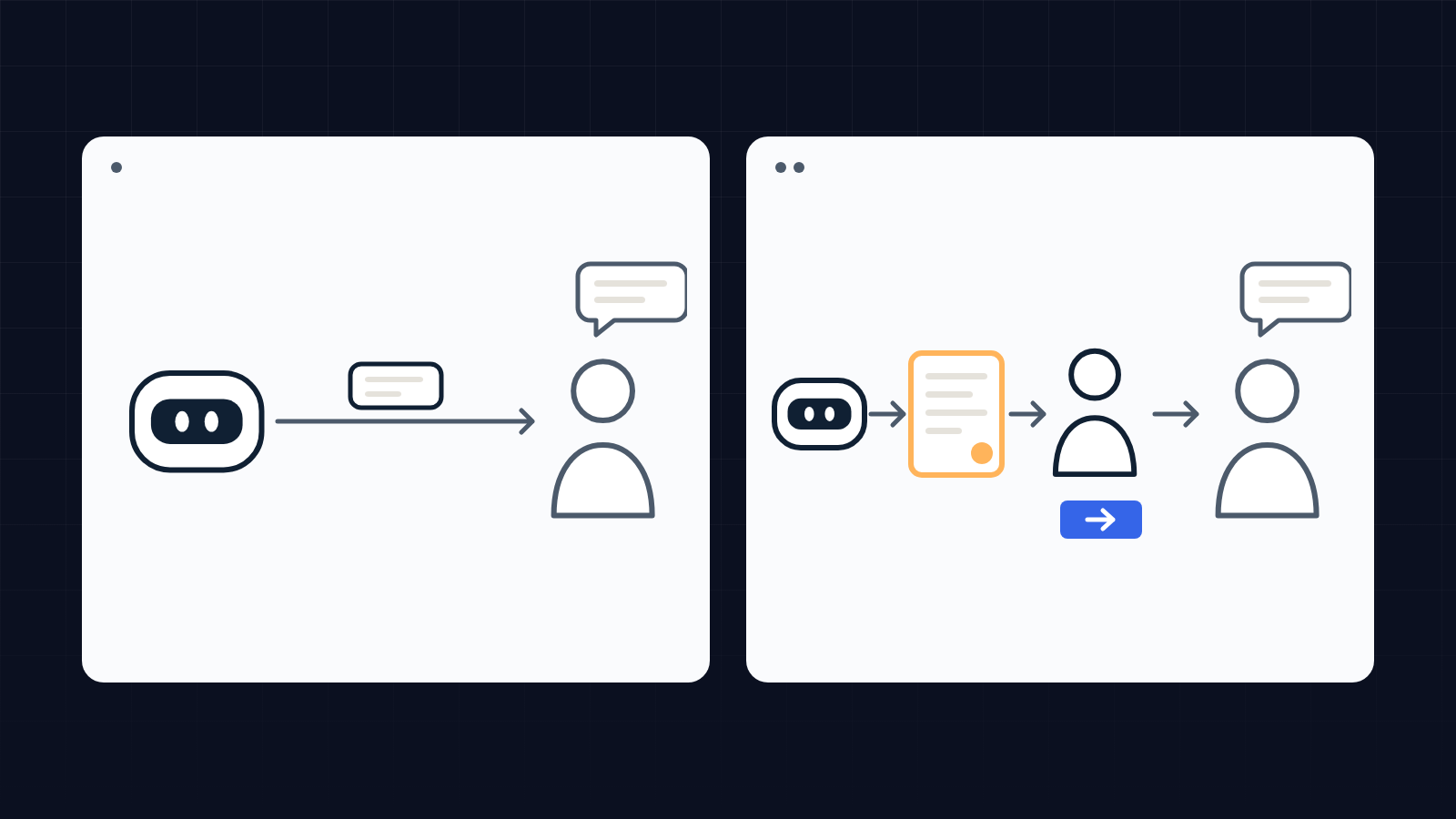
A chatbot answers on its own, live; an agent drafts and a person sends. Both have their place, and the line depends on one question: can the reply commit the company?

Two circuits side by side: on the left an automatic reply goes straight to the customer, on the right a drafted reply waits for a team member's review before it is sent.

Of the five providers we read, three plan a handover to a human when the conversation goes beyond what the bot can handle. None offers to have a person review a reply before it goes out. That is the difference between a delivery date promised by mistake and one that was checked.

What the customer asksWho answersWhy
Opening hours, address, documents needed, service areaThe chatbot, on its own and immediatelyThe answer is already written and does not depend on the customer
Where is my file, my order, my proposal?The agent drafts from your tools, a person sendsThe information is specific to that customer and a mistake shows
A price, a discount, a deadline, a goodwill gestureA person decides, the agent has prepared the fileIt commits the company
An unhappy customerA person, alwaysTone and decision are not delegated

The difference between a scripted chatbot, an AI chatbot and an agent is explained on our page business chatbot or AI agent.

What rules apply to a chatbot on a website in France?

Three, and they are settled at design time, not after launch. Only one of the five providers we read mentions them.

  • Tell customers they are talking to an AI. Article 50 of the EU Artificial Intelligence Act, applicable since 2 August 2026, requires that people interacting directly with an AI system be informed, unless it is obvious (AI Act Service Desk, European Commission). Our chatbot introduces itself as an automated assistant in its first message. Details are in our article on answering customer enquiries with an AI agent, which is not legal advice.
  • No tracker before the visitor opens the chat. The CNIL, France's data protection authority, accepts a cookie without consent only if it is set when the chatbot is opened and is used only to run it; before that, or for any other purpose, consent is required (CNIL guidance on chatbots).
  • Keep conversations only as long as needed. The CNIL distinguishes a purchase-help conversation, which can be deleted at the end, from a complaint, which can be kept longer. Since visitors can type anything into an open text field, it also recommends a warning against sharing sensitive data and regular purging.

All three are written into the scope you approve before we build, with the retention period you choose.

How does a chatbot project with a Paris small business work?

It starts from your real enquiries and ends with a go-live that you decide. We come to your Paris office for the two moments where being there matters: understanding the job, then correcting during the trial run.

Trial run meeting in a Paris office: two people compare on a screen the replies drafted by the agent with those the team actually sent.
  • The discovery audit: your channels, a sample of enquiries, the replies that must stay human. You leave with a written opinion, including if it concludes that an FAQ page is enough.
  • The written scope: what the system says on its own, what goes through a person, what it answers when it does not know, the documents it may use, the French and EU rules above, and a fixed-price quote you approve.
  • The build: your documents and tools connected read-only first, then tests on your past enquiries.
  • The two-week trial run: the system drafts without sending anything; we compare its replies with your team's and adjust with the person who will use it.
  • Ongoing support: monthly review of conversations and adjustments, no commitment.

The full framework is on our offers page, and what we do in Paris beyond chatbots on AI agency in Paris.

What should you ask a chatbot agency before signing?

Ask how the chatbot behaves when it does not know, and what happens to your data. The pages we read describe well what the chatbot does; they say little about what it does when it is wrong.

  • Which channels will the system see: website, email, forms?
  • What does it answer when the information is not in its documents?
  • Which replies go out without review, and who decided that list?
  • How long are conversations kept, where, and who reads them?
  • How does the customer know they are talking to an AI?
  • What do we get back if we stop: documents, settings, history?

FAQ

Are you a chatbot agency based in Paris?

Our registered office is at 47 rue Vivienne, in the 2nd arrondissement. We come to your office anywhere in Paris for the discovery audit and during the trial run, at no travel charge. The rest of the project is done remotely, in English or French.

Do you only build chatbots?

No. We install what fits the task: a chatbot when the answer is already written, an agent when someone has to read an email, find a file and draft a reply, or a simple rule with no AI when that is enough, such as an acknowledgement of receipt.

Can the chatbot answer customers in English and French?

Yes, if it has your information in both languages or is allowed to translate it. The written scope sets out the languages handled and what goes through a person, whatever the language.

Where are conversations stored?

On your systems or on a server in the EU, for the period set in the scope. Access to your tools is entered by you and is never visible to us.

Do we need a new website or new software?

No. The chatbot is added to your current website, and the agent works in your email and CRM. If a tool offers no official access, we tell you during the audit instead of working around it.

How many enquiries make a chatbot worthwhile?

There is no universal threshold. What counts is repetition: if the same questions come back every week and keep someone busy, a system is justified. A few enquiries a month are not enough, and we will tell you during the audit.