How many small businesses use AI in 2026?
Use has tripled in two years. The barometer counted 13% of small businesses using AI in 2024, 26% in 2025 and 40% in 2026. For firms with 10 to 249 staff, the share went from 34% to 53% in a single year. Among businesses that use AI, 68% say it has a positive effect, and 84% of those that pay for a tool.
Mostly, these figures show that AI came in through individual desks: someone writes an email faster, someone else summarises a document. Spending tells the same story. According to the same survey, 17% of small businesses pay for subscriptions or licences, 3% for custom development and 2% for consulting. Very few have connected AI to an actual business process, with its tools and its approval rules. Insee, using another method and 2024 data, found 9% of users among firms with 10 to 49 staff: the gap between the two surveys is a reminder that "using AI" covers very different things.
What does AI change, role by role, in a team of 20?
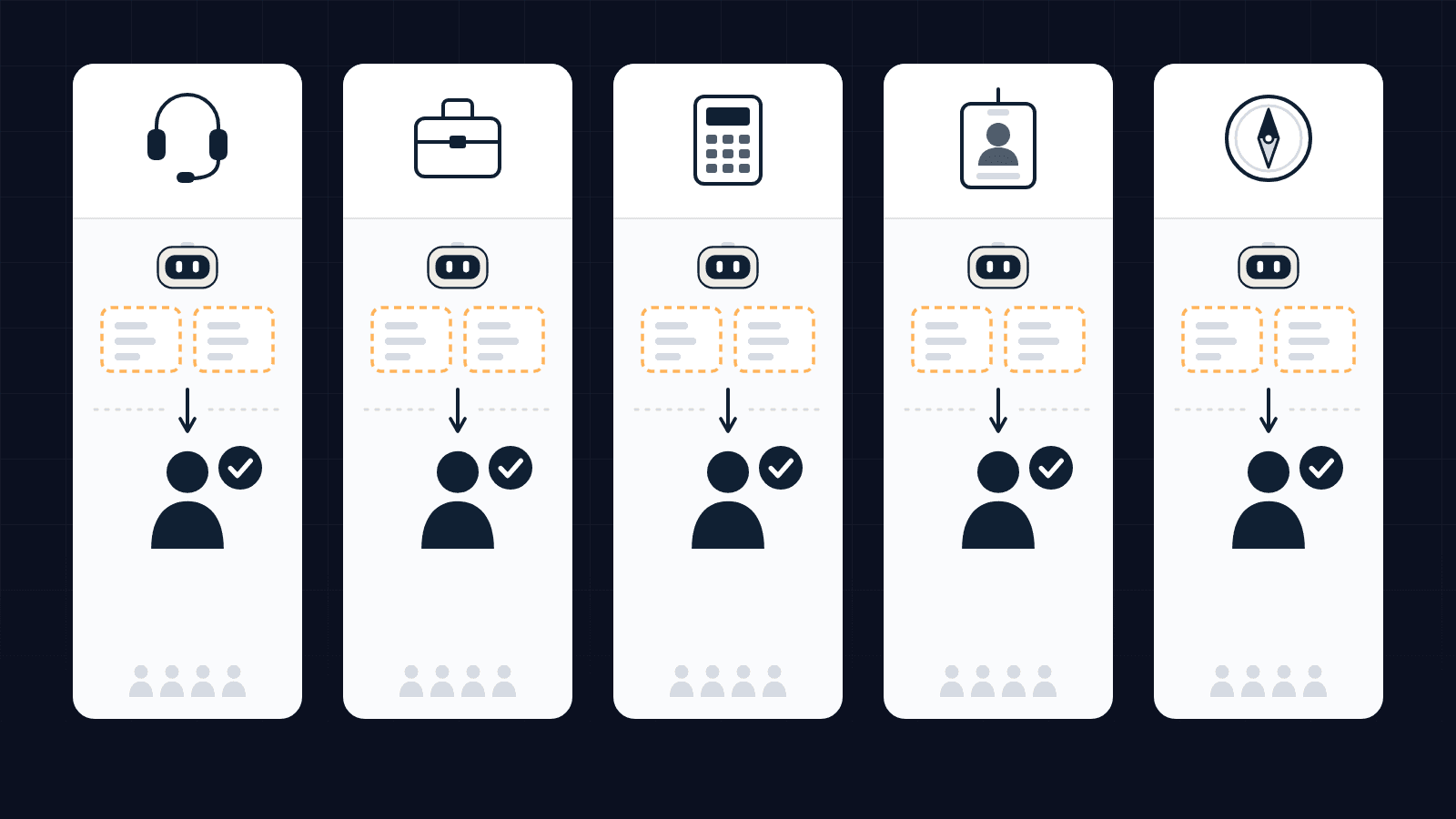
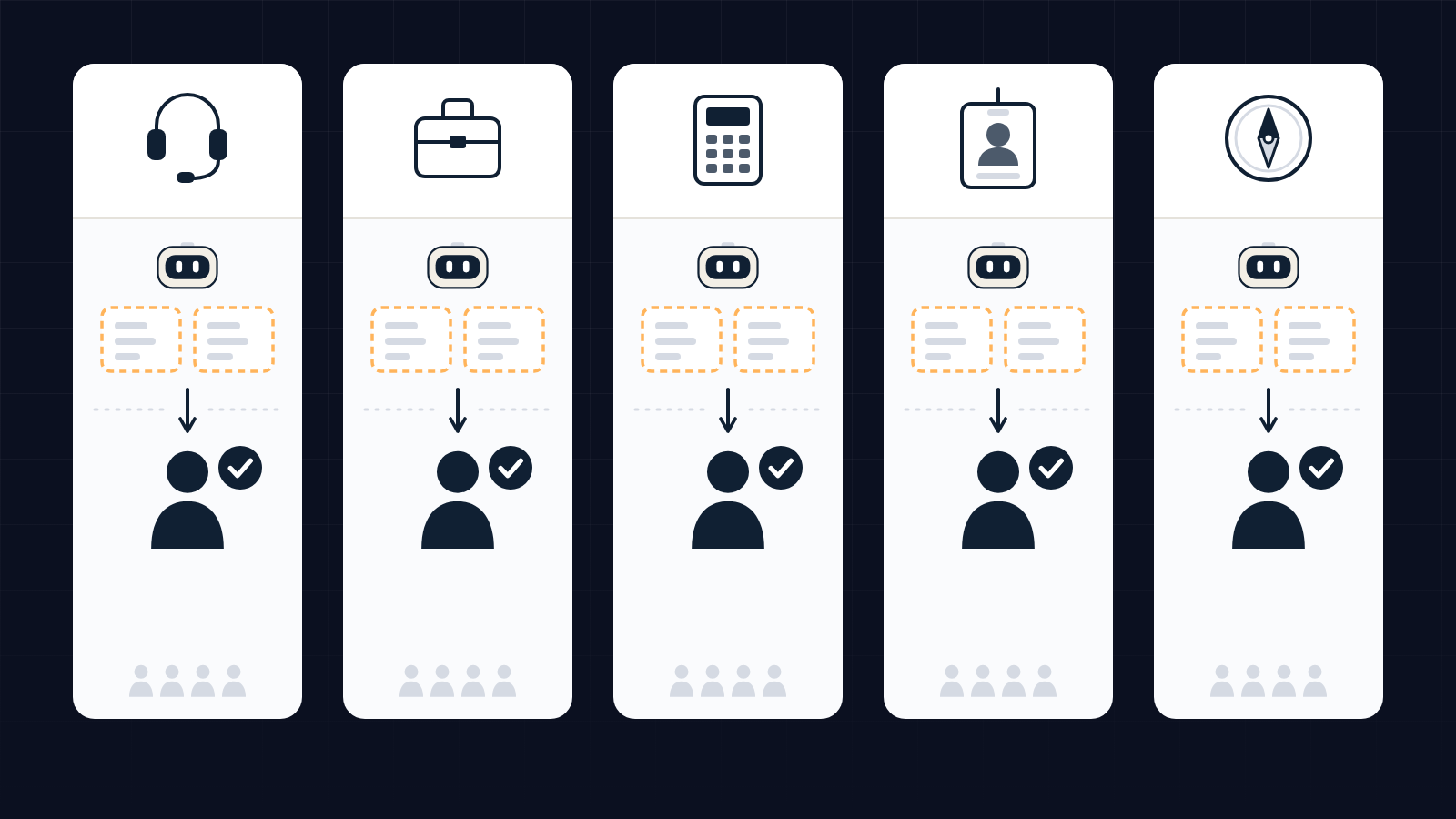
At this size there is often one person per function: one at the front desk or on sales admin, two or three salespeople, one person in accounts, and an owner who does a bit of everything. The cost sits in preparation tasks squeezed between two calls that slip into the evening. That is where an AI system gives time back, as long as the decision stays with the person who owns the job.
| Role | What an AI system can prepare | What stays with a person |
|---|---|---|
| Front desk, sales admin | Read incoming email, sort it (quote request, complaint, follow-up, supplier), draft a reply | Sending the reply, handling an unhappy customer, deciding on an exception |
| Sales | Draft a first quote from the request and the product list, flag quotes with no answer, summarise a customer's history before a meeting | The final price, the discount, the negotiation, the relationship |
| Accounts | Read supplier invoices, extract amounts and due dates, flag a mismatch with the purchase order | Payments, chasing a late customer, talking to the accountant |
| Hiring | Write a job ad from a role description, prepare interview questions | Choosing the candidate, anything that concerns a person |
| Owner | A weekly summary of what came in, what went out and what is still waiting | Priorities, trade-offs, strategy |
For incoming requests, we detail this split on our page about handling quote requests, and the cost of sorting email in this article on AI email triage.
What doesn't AI change?
It does not change accountability. A quote sent with a mistake is still the company's quote, whatever tool prepared it. That is why, before building anything, we write down what the system does on its own, what goes through an approval, and what it is not allowed to do. Everything it has read, prepared or sent can be checked afterwards.
Nor does it change the quality of the information you start from. A white paper published by France Num with Bpifrance, the French public investment bank, notes that about a third of the small businesses it supported had no data strategy: information scattered across software, or not digitised at all. A system that reads a wrong price list drafts a wrong quote. The same document names the lack of in-house skills as the first obstacle for businesses that fail to adopt AI (88% of them). A team of 20 has no specialist: it needs a system the person in the role understands and can correct, not one more tool to watch over.
Where should a 20-person business start with AI?
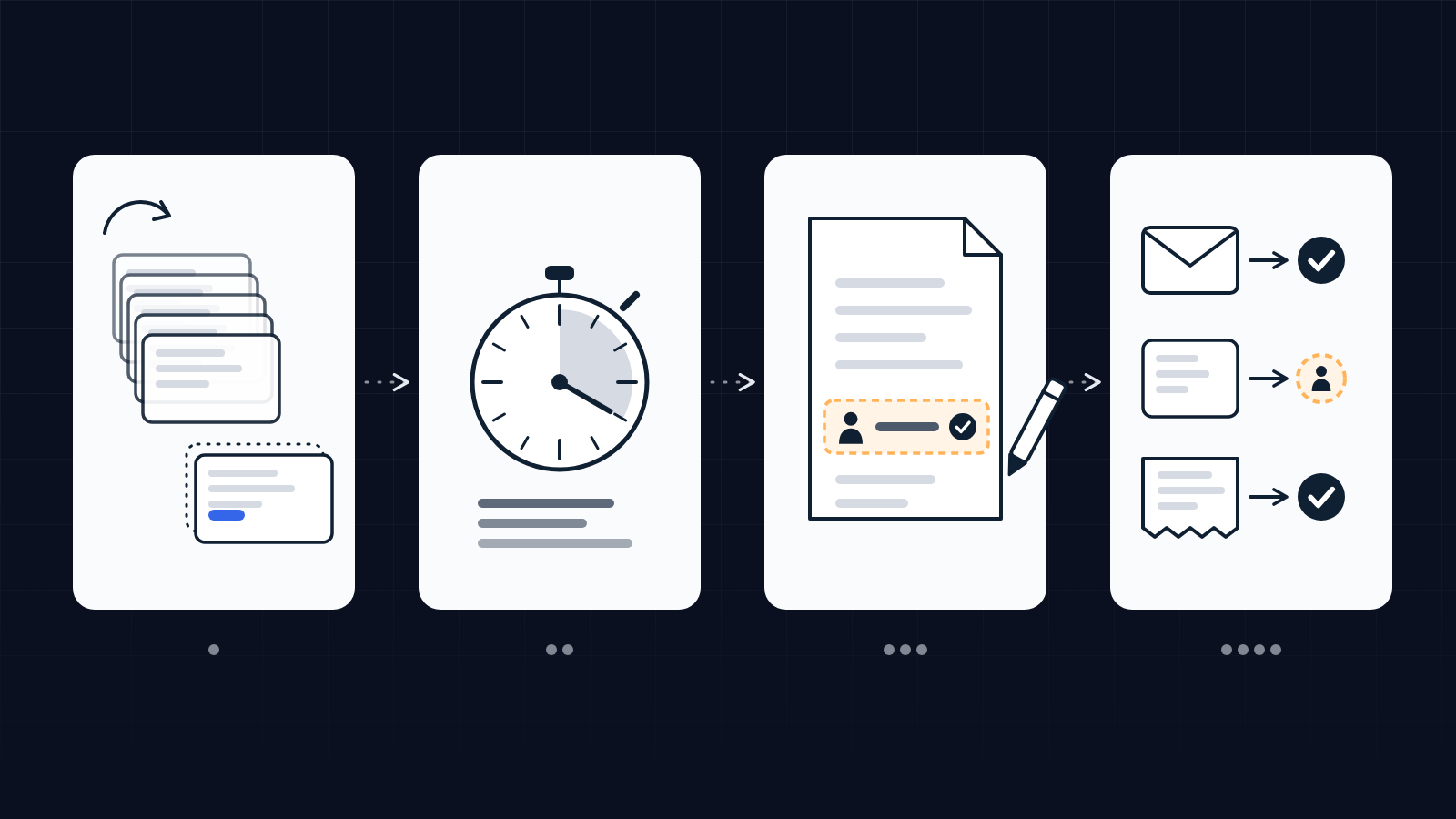
With one task. The one that comes back every week, that someone does reluctantly, and whose hours you can count. Describe how it is done today, with which tools, and which decisions must stay with a person. Only then pick the means.
| Your situation | What is often enough | What to check |
|---|---|---|
| People write or summarise text, each on their own | A well set-up chat assistant and a written usage rule | Which data may be pasted into it |
| A task always follows the same path, with no judgement involved | A simple automation between your tools | What happens when a case leaves the expected path |
| A task means reading, understanding and preparing an answer | An AI agent that prepares, a person who approves | The written list of what it does alone and what it may not do |
| The task is rare, or every case is different | Nothing: the gain does not cover the set-up | Nothing to build, and that is a valid answer |
For a first remote look, our online AI audit starts from the task that weighs on you most, not from a list of tools. And if the task calls for an agent, our page on AI agents for small businesses shows how one works inside your inbox and your software, with your approvals.
What we read before writing this
On 13 October 2026 we looked at the top results on Google in the US and the UK for "ai for small business". Most are lists of tools (HubSpot, GoDaddy, Salesforce, Google Workspace, Microsoft) or beginner guides; the UK results add a small business federation guide and a usage study by the JPMorganChase Institute. In the pages we read, none splits the work between the system and the person, role by role, for a business of this size. That is what this article tries to do.
FAQ
Does a 20-person business need an AI specialist?
Not in-house. It needs one person per role who understands what the system prepares and can correct it. The build can be handed to an outside provider, as long as the approval rules are written down and the business keeps its data.
Which tasks should a small business hand to AI first?
The ones that come back every week and consist of reading then preparing: sorting incoming email, a first draft of a quote, reading invoices, following up quotes with no answer. Anything that commits the business without a review comes last.
Does AI do an employee's job in a small business?
In a team of 20, everyone already covers several roles. What AI takes off their plate is hours of preparation, not the job: the decision, the customer and the signature stay with the person in the role.
What should a small business check before using generative AI?
Which data may go into the tool, who can see the results, what happens if the provider changes its terms, and whether the know-how stays inside the business. The French data protection authority, the CNIL, points small firms to practical guides that cover these points.
Sources: France Num, "Baromètre France Num 2026 : le numérique et l'intelligence artificielle dans les TPE et PME", published 17 September 2026, updated 28 September 2026 (francenum.gouv.fr, accessed 13 October 2026) · France Num, "L'intelligence artificielle, une révolution technologique pour les PME : livre blanc" (francenum.gouv.fr, accessed 13 October 2026) · Insee, "Use of information and communication technologies by companies in 2024", Insee Première no. 2061, 1 July 2025 (insee.fr) · CNIL, "Utiliser l'IA générative dans les TPE et PME" (cnil.fr, accessed 13 October 2026) · Google US and UK results for "ai for small business", 13 October 2026. No customer is named.