AI agent · Real estate and lettings agencies

AI agent for real estate agencies: answer buyer enquiries first, keep the decisions

An AI agent in a real estate agency reads the enquiries that come in from listing portals, your website and your inbox, finds the property, drafts a reply and offers a viewing slot. The agent on your team reads it and sends it, or lets through on their own only the messages the agency chose to automate. It never sets a price, negotiates or picks a tenant. Before choosing a tool, one question matters more: where do your enquiries arrive, and can your property software be read? Équipage IA looks at one task with you, gives a written opinion, then builds what was decided.

Twenty to thirty minutes. No commitment.

What does an AI agent do in a real estate agency?

It prepares the work that lands on the front desk and the sales team between viewings. A buyer writes at 9 pm through a portal: the agent reads the message, matches the property from the listing reference, checks in your software that it is still available, drafts a reply and suggests two open slots from the calendar. Next morning, the agent on your team finds the enquiry summarised, the reply ready and the one question still open.
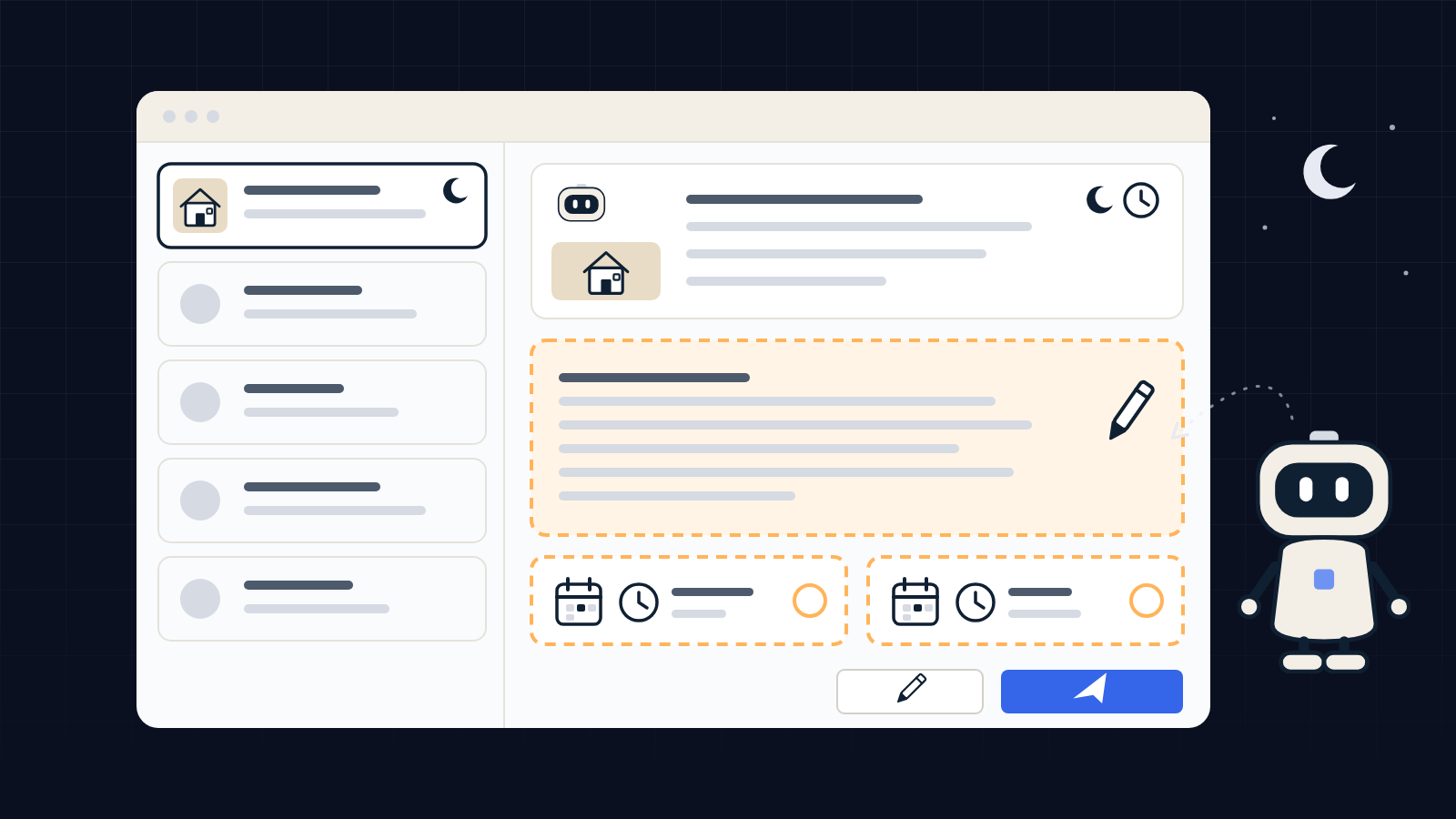
An agency inbox where a buyer enquiry received in the evening is shown summarised, with a drafted reply and two viewing slots waiting for approval

Three tasks come up in almost every agency, and they do not need the same level of tooling.

TaskWhat the AI agent preparesWhat stays with the agency
Incoming enquiries (buyers, tenants)Reads the enquiry, finds the property, drafts the reply and slots, asks the qualifying questions (area, budget, timing, financing)Sending anything that commits the agency, the viewing, the relationship
ListingsA first draft of the listing text from the property record, sent to the syndication toolProofreading, accuracy of mandatory details
Lettings follow-upsReminders for lease dates, service charges, missing documents, from your software's export or APIAnything involving a dispute, a contested arrear or a decision about a tenant

The first row works like our enquiries and quotes agent: the request is read, the information found, the reply drafted, a person approves.

Why start with incoming enquiries?

Because that is where an agency loses business without noticing. A buyer who wrote to three agencies about similar homes views first with the one that answered. An enquiry that arrives on Saturday evening and gets handled on Monday at noon leaves no trace in any dashboard: it simply went elsewhere. We quote no figure on this, since none can be checked from the outside. We ask instead how many enquiries you get each week, and how many get a same-day answer.

It is also the easiest task to measure during the trial run: we compare the agent's drafts with the replies your team actually sent over the same period. If the gap is bad, you see it before going live.

Can your software and the portals be connected to an agent?

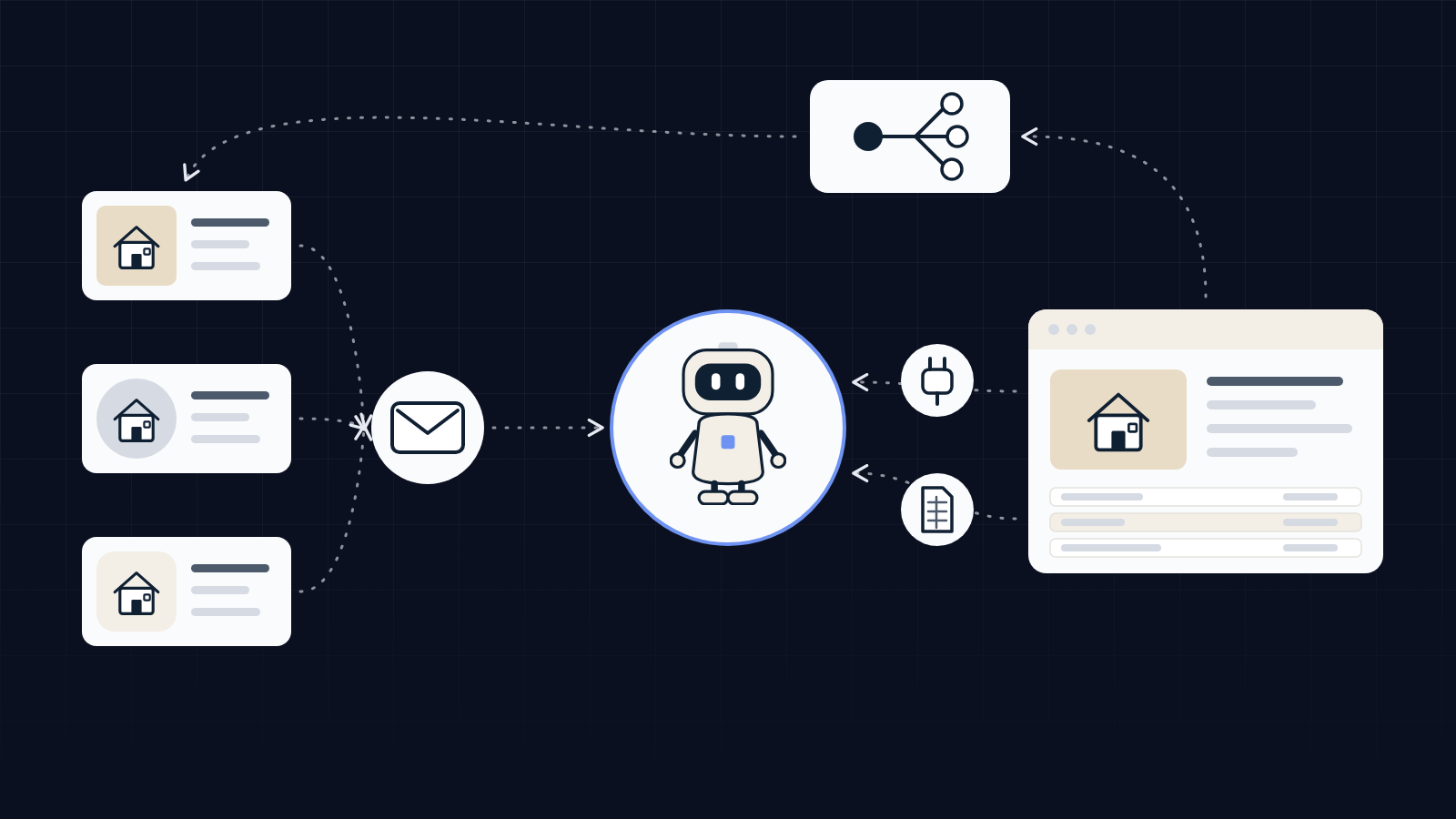
Not all of them, and that is the first thing to settle. On 24 September 2026 we checked what nine property software tools and portals commonly used by French agencies allow. The answer is less tidy than the brochures suggest.

Diagram of enquiries arriving from portals by email, the agency software read through an API or an export, and the listing syndication tool, with the AI agent in the middle
SituationTools concerned (our check of 24/09/2026)What it allows
API confirmedApimo (read and write: properties, contacts, leads), Netty (open API announced by the vendor)The agent reads listings and can create the contact or task in the software
No public APISeLoger Pro, Leboncoin immo, the two leading French portals (access reserved for partner vendors)Enquiries are read from the emails the portal sends to the agency; reliable, and the normal route
Not confirmed yetHektor, AC3 / Immofacile, Crypto, Septeo, GercopChecked with you and the vendor during the audit; otherwise export or email

Two rules follow. Listings go out through a syndication tool (Ubiflow, Melo, Moteurimmo), not by writing to each portal. And we never pull data from a portal by means it does not provide: the compliance risk would fall on the agency. To compare a simple website chatbot with an agent connected to your software, read business chatbot or AI agent: which one.

What the agent does not do, and what the law requires

It does not value a property, negotiate a price, select a tenant or answer a complaint for you. Those decisions commit the agency and affect private individuals, so they stay with a person. Tenant selection is the clearest case: under the GDPR (Article 22), people are protected against decisions that significantly affect them and are based solely on automated processing.

Three rules are set before going live.

  1. The agent says it is an AI when it talks directly to a buyer or tenant: the EU AI Act requires it for systems designed to interact with people. Our article on answering customer requests with an AI agent covers this.
  2. No cold outreach to private individuals. In France, since 11 August 2026, calling a consumer for marketing requires their prior consent, unless the call concerns an existing contract (CNIL, read on 14/10/2026). Replying to an enquiry or reminding a tenant about their lease: yes. Calling owners found on portals: no.
  3. Anything that commits the agency goes through a person: a price, an uncertain availability, a reply to an unhappy client. The AI drafts, your agent sends.

None of this replaces legal advice for your agency.

How Équipage IA sets it up

With a discovery audit on a single task, then a written scope before any paid work. We run our own agents on the agency's prospecting, content and admin, under the same rule: they prepare, a person approves what goes out. That is the setup we install for you.

A real estate agent at a desk reading a reply drafted by the AI agent before sending it, with the property record open next to it
  • Discovery audit (20 to 30 minutes, by video or at your agency in the Paris region): the task, your software, your portals, the decisions that stay human. You leave with a written opinion: AI agent, fixed rule, or nothing worth building.
  • Written scope: what the agent does alone, what goes through your team, what it never does, and the quote.
  • Build: read-only first, on past enquiries; you enter your own credentials, encrypted and never visible to us.
  • Two-week trial run: the agent drafts without sending, you compare with what the team answered, then decide whether to go live.

To pick the first task, and know when to skip AI altogether, read AI agents for small businesses: where to start.

FAQ

Does an AI agent replace a real estate agent?

No. It takes the first reply, qualification, reminders and data entry. Viewings, negotiation, valuation and decisions stay with your team. It saves the time spent looking things up and retyping, not the client relationship.

Does it work with the big listing portals?

It reads the enquiries the portals email to the agency. That is the normal route in France, since SeLoger and Leboncoin do not offer agencies a public API according to our check of 24/09/2026. Listings go out through your syndication tool. We never scrape a portal.

What about my property management software?

Apimo and Netty have a confirmed API in our check. For other tools we could not confirm it: we check with you and the vendor during the audit. Without an API, the agent works from an export or from the software's emails.

Will buyers know they are talking to an AI?

Yes, whenever they talk to it directly: the EU AI Act requires it. When the AI drafts and someone on your team sends, the reply goes out in that person's name, after they have read it.

Can the agent chase owners for new listings?

Not cold. In France, phoning a private individual for marketing now needs their prior consent, and so do email and text. The agent can follow up with a seller who asked for a valuation and agreed to be contacted; it does not prospect owners found on portals.

How long before I know if it works?

The trial run lasts two weeks: the agent drafts without sending, and you compare its replies with your team's over the same period. You judge on evidence before going live. We promise no result figures.