AI agents · Accounting firms · Paris

AI agent for accounting firms in Paris: document collection and reminders prepared, your staff approve

In an accounting firm, an AI agent prepares the work that surrounds bookkeeping: it spots missing documents client by client, drafts the reminders, reads the receipts and statements that come in and files them, then hands everything to a staff member. That person approves each message before it is sent and each entry before it is imported. Équipage IA, a Paris-based agency, installs these agents in the software the firm already uses, one task at a time, starting with the one that eats the most hours at year-end.

Twenty to thirty minutes. No commitment.

What does an AI agent do in an accounting firm?

It takes over the repetitive part of the work that comes before bookkeeping and review, the part that is done today by email and phone. On a typical collection day:

  • for each client file, it compares the list of expected documents (bank statements, purchase invoices, expense claims, contracts) with what has arrived;
  • it drafts a reminder in the firm's tone, listing exactly what is missing;
  • it reads incoming documents, extracts amounts, dates and suppliers, and flags anything unreadable or duplicated;
  • it keeps a status for every file, so the engagement manager sees only the blocked files each morning.
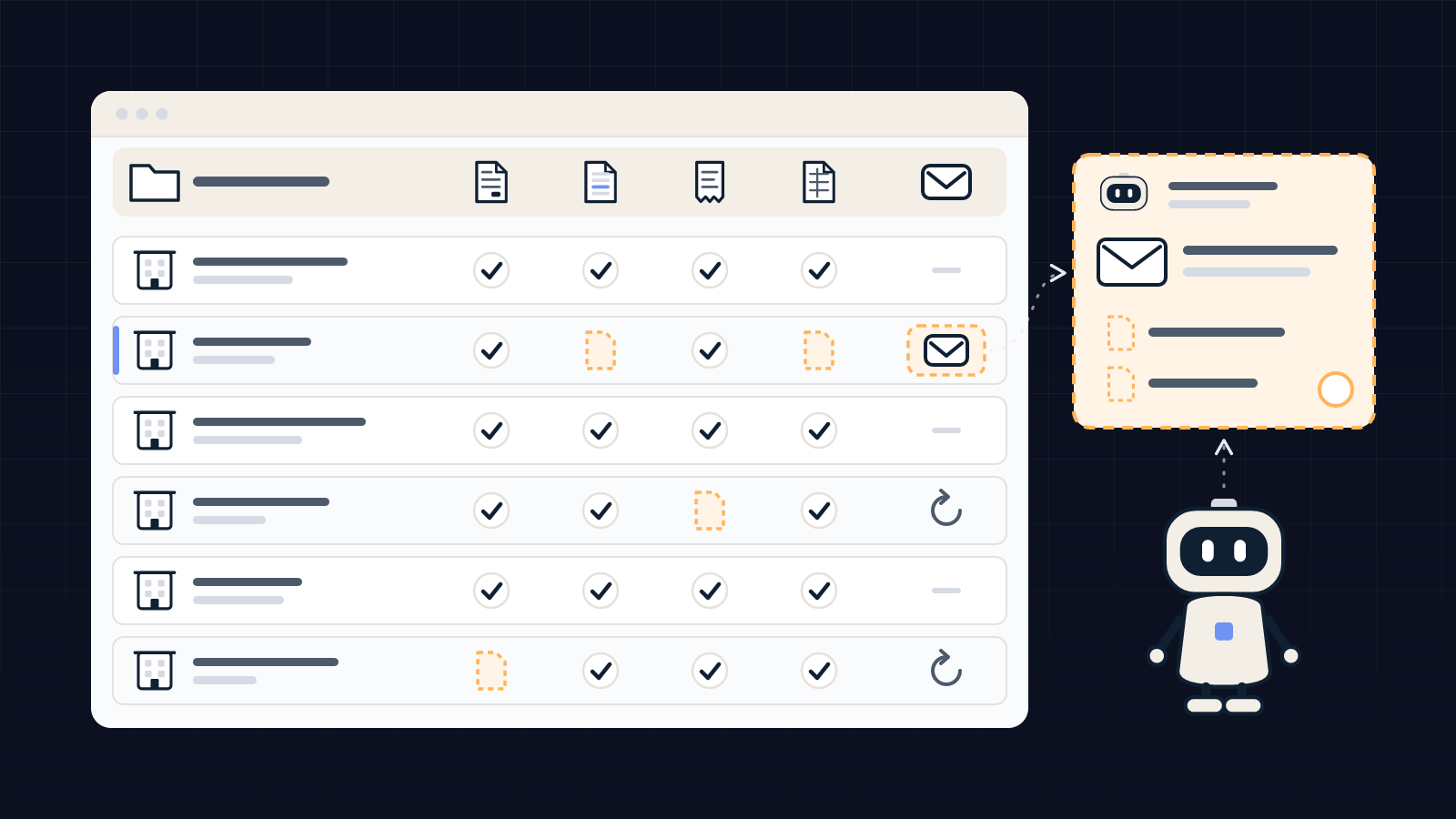
Document collection tracker for an accounting firm: one row per client file, received documents ticked, missing ones in orange and a reminder ready for approval

What it does not do: it signs nothing, files no tax return and sends no message a staff member has not approved, at least for the first weeks. The approval rule is written down with the firm before the agent starts.

How many accounting firms are there in Paris, and why now?

On 25 October 2026, the French government's public company search API lists 6,616 active businesses registered under the accounting activities code (APE 69.20Z) with a site in Paris. The three surrounding departments add 2,355, 1,388 and 932. Paris alone holds more than half of the 11,291 businesses in this inner ring.

AreaActive businesses, accounting activities code
Paris6,616
Hauts-de-Seine (west of Paris)2,355
Val-de-Marne (south-east)1,388
Seine-Saint-Denis (north-east)932

Source: Recherche d'entreprises API (data.gouv), filters: activity code 69.20Z, department, active status, read on 25/10/2026. The code covers all accounting activities, including chartered accountancy firms.

These firms share one constraint: during year-end, their staff spend part of their time chasing documents instead of analysing them. That is the part an agent can prepare.

Is professional confidentiality compatible with an AI agent?

Yes, provided two levels of work are separated from the start. Chartered accountants are bound by professional secrecy, and an agent that reads client files has to be set up accordingly. We distinguish:

  • the administrative level: knowing a document is missing, sending a reminder, tracking progress. The agent handles file names and document lists, not their content;
  • the content level: reading an invoice, extracting an amount, preparing an entry. Here, where the data is processed and who can access it are agreed with the firm before the agent starts. Each party's roles and obligations are written into a data processing agreement fitted to the scope of the work.

Access to the software is only discussed at the scoping stage, and the firm enters its credentials itself, in its own workspace. This page describes how we work; it does not replace advice from your legal counsel or your professional body.

Which practice software can an agent connect to?

It depends on what the vendor opens up. Our internal review of vendor documentation, dated 24/09/2026, gives three cases for the tools common in France:

SituationSoftwareWhat the agent does
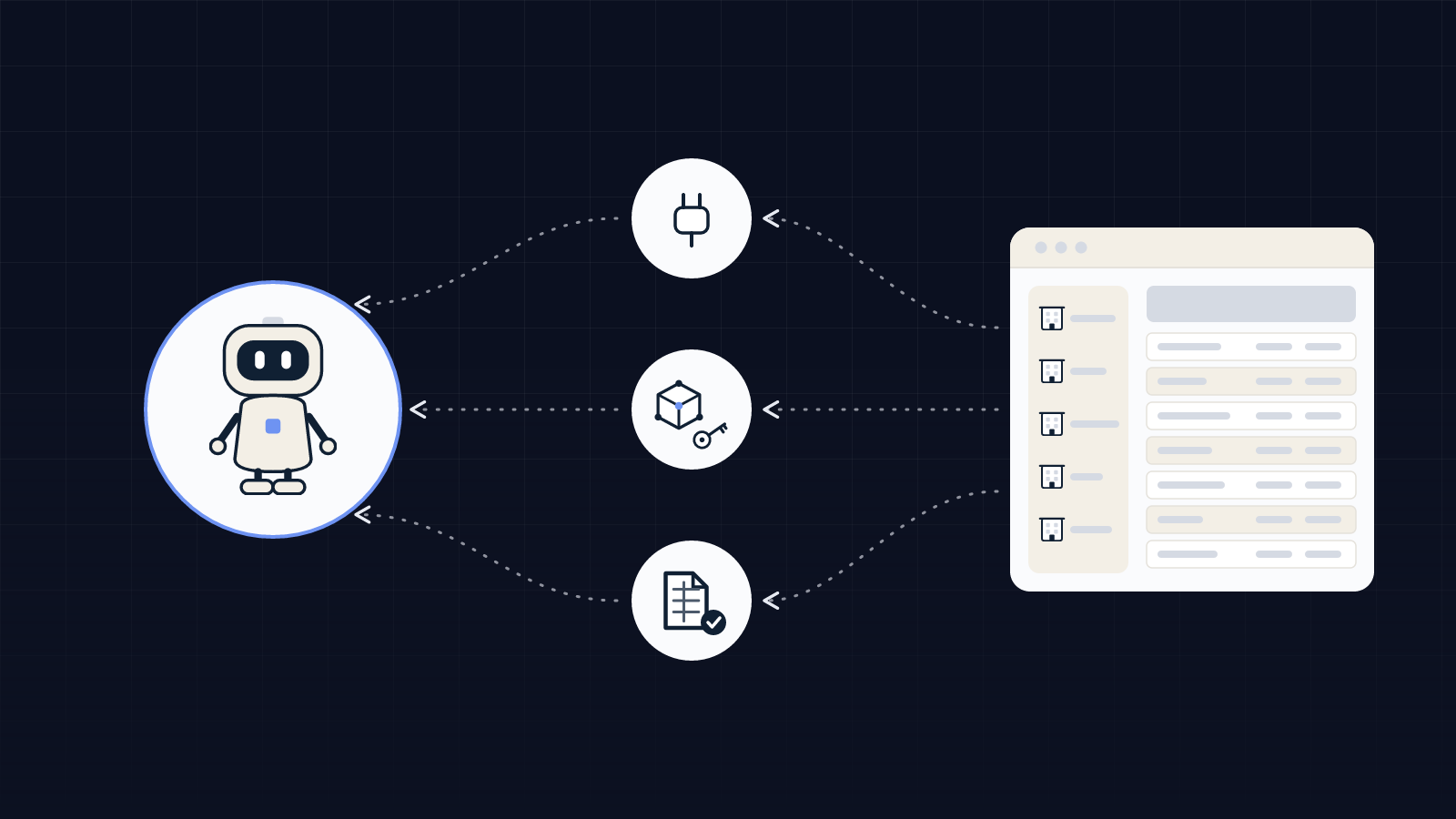
Documented APIPennylane; EBP (cloud editions, support contract required); Sage Active (vendor plan)Reads and prepares data in the software; staff approve the import
Partner-only APICegid Loop (paid Advanced key for the firm), MyUnisoft, TiimeAccess depends on the vendor's agreement, otherwise import files
Installed software with no server APISage 100Prepares an import file or works from the existing collection tool
Diagram of the three ways an AI agent connects to an accounting firm's practice software: through an API, through vendor partner access or through an approved import file

The firm does not have to change software. If its tool stays closed, the agent works upstream, on the inbox and the documents, and drops a clean file that a staff member imports.

What other pages on the topic leave out: our review of 10 results

On 25/10/2026 we read the top 10 pages returned for "agent IA cabinet comptable Paris" (the French query) and noted what each one covers.

Element looked forPages covering it (out of 10)
Human approval before sending or posting7
Claimed time saving or percentage6
Price in euros5
Professional secrecy4
API connection to the software4
Cases where an agent is not worth it0

Method: top 10 results from the Exa search engine for the query, page text read on 25/10/2026, each element counted once per page. The savings figures are claimed by the page authors; we have not checked them and do not repeat them.

None of the 10 pages says when to hold back. Yet it is the first question a partner asks after seeing several tools come and go. The next section answers it.

When is an AI agent not worth it for an accounting firm?

  • Few recurring files: when collection takes a handful of reminders a month, an email rule or the software's own collection tool is enough.
  • A collection tool already in place and used: if it already sends reminders and clients reply, an agent adds nothing measurable.
  • A task that needs judgement: review, advice and tax decisions stay with the staff and the chartered accountant.
  • Starting in the middle of year-end closing: in its first weeks, the agent produces lists and proposals that the team reviews. If nobody has time to review them, it is better to agree a quieter start date with the firm.

The discovery audit ends with a written verdict: fixed-rule automation, an AI agent, or nothing worth building. The third outcome is possible.

How does setup work in a Paris firm?

  1. Discovery audit (20 to 30 minutes, by video or on site in the Île-de-France region): one task, your tools, the decisions that stay human.
  2. Scoping when the need goes beyond one task: the steps from collection to review, bottlenecks measured with your own figures, a staged plan.
  3. First system on a single process, for example document reminders for twenty client files: a first version, trials with your staff, then go-live.
  4. Monthly follow-up: rule fixes, new files, new document types, with no commitment beyond one month's notice.
Approval screen for an accounting firm staff member: the reminder drafted by the agent, the list of missing documents and two buttons, approve or edit before sending

We run our own books the same way: an agent creates invoices and attaches receipts to the agency's bank transactions, and nothing reaches a client without approval from Hakim Ouahabi, the founder. The agents we install work on the same principle.

FAQ

Can an AI agent do the bookkeeping instead of my staff?

It prepares the bookkeeping: it reads the document, suggests the account and amounts, and flags anomalies. A staff member approves the entry before import. We do not set up imports without approval.

Do we need to change our practice software?

No. The agent connects through an API when the vendor offers one; otherwise it prepares import files or works upstream, on the inbox and the documents.

Where is client data hosted?

We agree it with the firm during the discovery audit: where its data is processed and who can access it. Each party's roles and obligations are then written into a data processing agreement fitted to the scope of the work.

Can the agent file a tax return?

No. It can prepare figures, never file. Filing and signing stay with the firm.

Do you only work with firms in Paris?

No. We work in the Île-de-France region, in Paris and in the surrounding departments. The discovery audit takes place by video or on site in Île-de-France.