AI agents · Restaurants · Paris

AI agent for restaurants in Paris: group requests, menus and reviews, prepared during service

In a Paris restaurant, an AI agent first earns its place on the written work outside service: group requests, consistency between the menu, the invoices and the allergen register, replies to reviews. It prepares, a person approves.

Twenty to thirty minutes. No commitment.

What does an AI agent do in a Paris restaurant?

It handles the written work that waits until service is over. A request to book the room for forty people arrives by email at 12:40. The agent reads it, notes the date, the number of covers, the stated budget and the dietary constraints, checks in your booking tool whether the room is free, and drafts a reply using the packages you have defined. At 3 pm, the manager finds the request summarised, the reply ready and the one question still open. They read it, edit if needed, and send it.
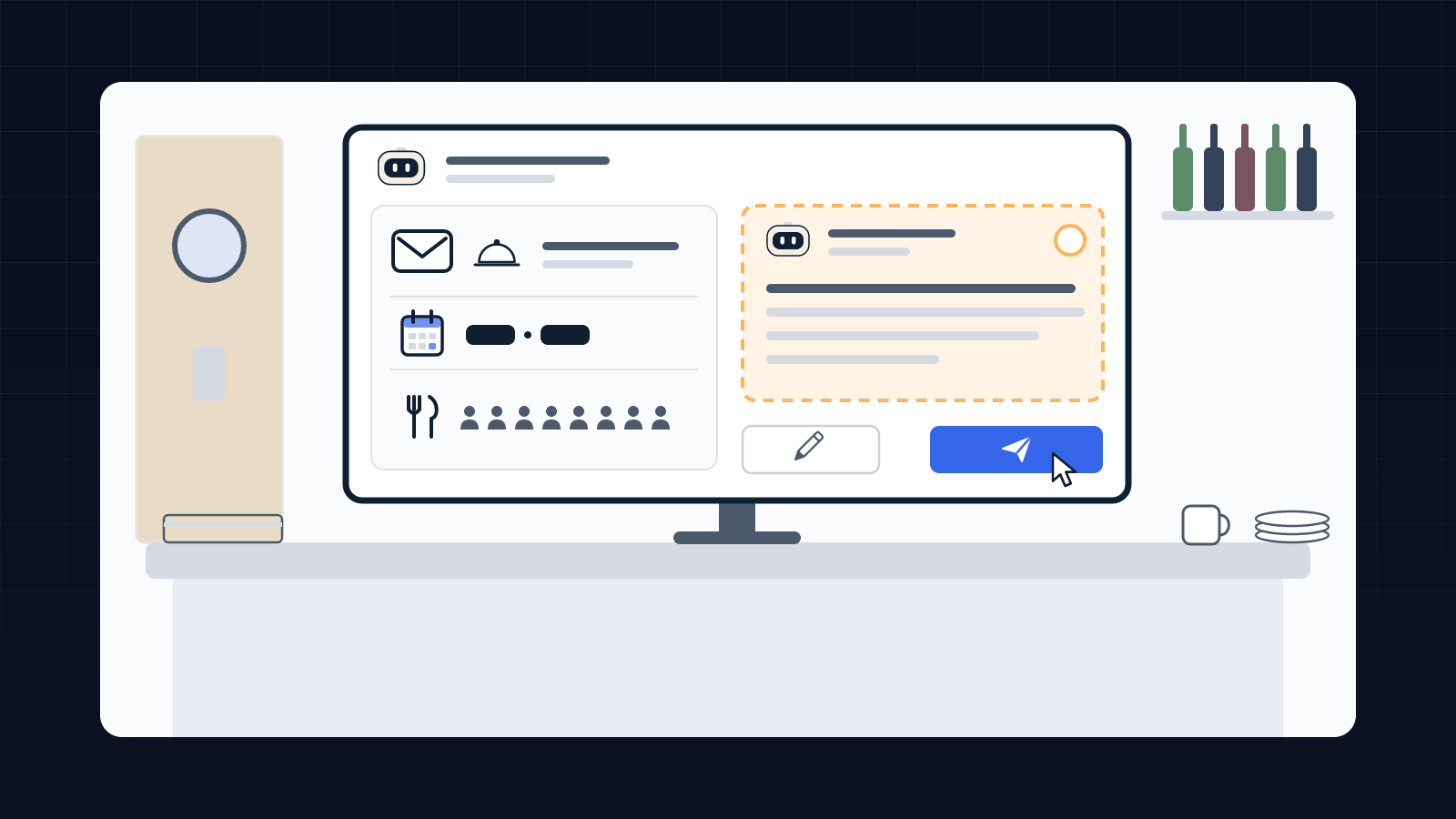
Computer screen in a restaurant back office: a private-hire request received during service is shown summarised, with the date, the number of covers and a drafted reply waiting for approval

The agent does not answer the phone, set a price or promise a table. It prepares; someone on your team decides what goes to the customer. The rule is the same as for our requests and quotes agent: the request is read, the information found, the reply drafted, a person approves.

Why not start with a voice agent?

Because that need is often already covered, and the time is lost elsewhere. On 1 November 2026 we looked at the first eight Google results for "agent ia restaurant paris": six promote a voice or phone agent that takes bookings, a seventh a staff scheduling tool, and the last one is a ranking of tools. On the broader search "ia restaurant", seven of the first nine results come from software vendors or trade suppliers.

If your problem is the phone ringing during the rush, one of those products may be enough, and we will tell you so. What these offers cover less is the written side: group requests that take three exchanges, dish sheets to keep up to date when the menu changes, reviews nobody has time to answer. In Paris, demand for group bookings can be measured: the French search "privatisation restaurant paris" had 390 searches in September 2026, according to DataForSEO (pulled on 1 November 2026). Each of those searches can end up as an email in your inbox.

TaskWhat the agent preparesWhat stays with you
Group and private-hire requestsSummary of the request, room availability read from your tool, reply using your packages, follow-up if the customer goes quietThe price, the deposit, the final yes
Menu and dish sheetsDish and ingredient names compared with supplier invoices, list of allergens to update when a recipe changesThe recipe, approval of the allergen sheet
Online reviewsA draft reply for each review, flagging reviews that need the manager's answerPosting, and any reply to a complaint
Supplier invoicesReading invoices received by email, flagging price or quantity gaps, export for your accountantPayment, the discussion with the supplier

What do French rules say about menus and allergens?

Two rules make this check useful. First, dish and ingredient names on the menu must not mislead and must match those on the supplier's invoice; a "bloc de foie gras" cannot be called "foie gras" on the menu. Second, for food that is not pre-packed, allergen information must appear on the menu or in a register available to customers (Service Public, page checked on 18 February 2025, read on 1 November 2026).

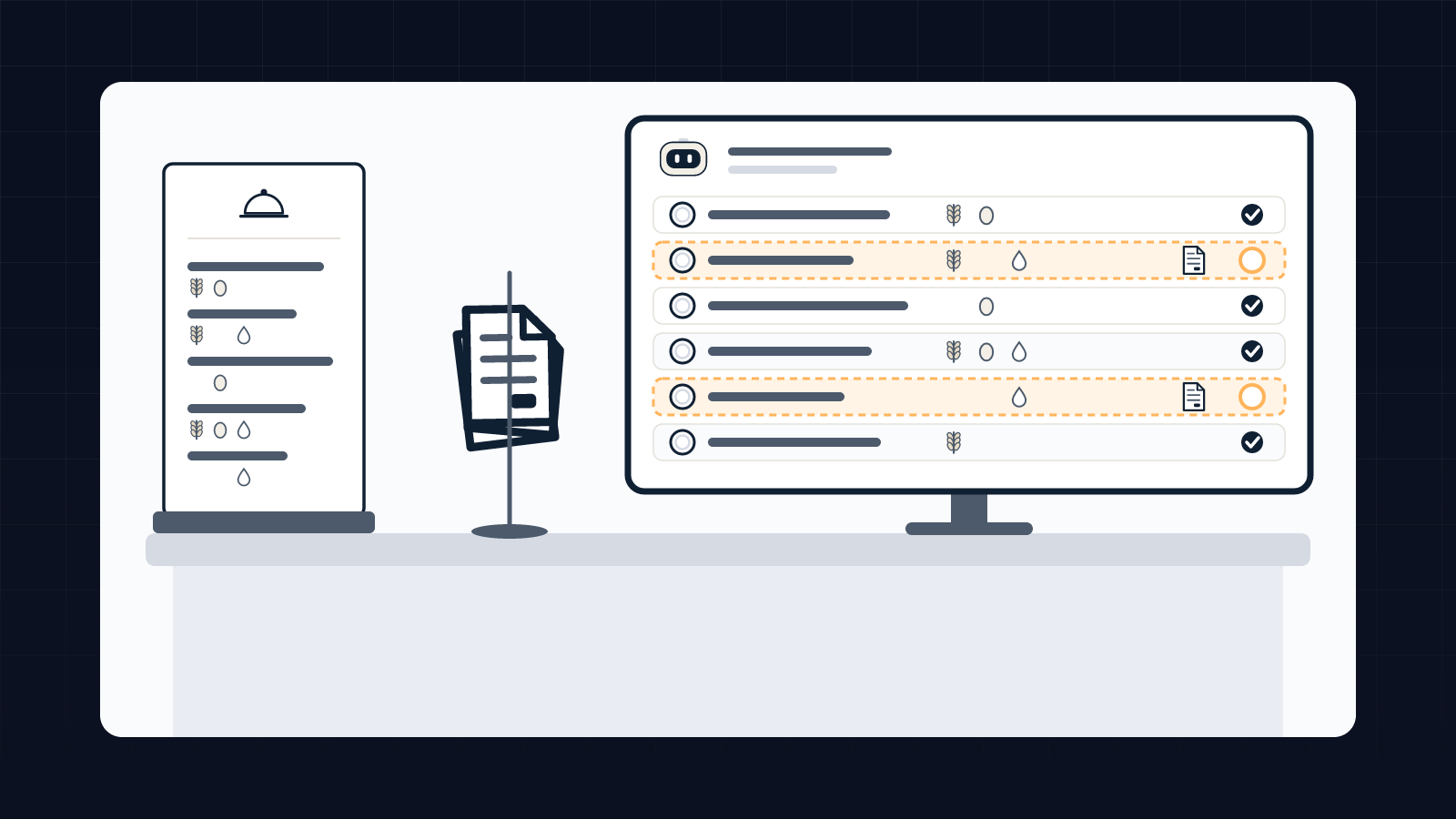
Restaurant office with the day's menu next to supplier invoices, and a screen listing the dishes whose name or allergens no longer match the products bought

When the menu changes every week, these documents drift apart quickly. The agent reads the new menu, matches it against the latest invoices and your recipe sheets, and gives you the list of gaps: a product replaced, a name that no longer fits, an allergen to add to the register. It corrects nothing itself and never answers a customer asking whether a dish contains an allergen. That answer engages your responsibility; it comes from your approved sheet or from someone on the floor.

What the agent does not do

It does not set prices or discounts, take deposits, confirm a private hire or answer a complaint on your behalf. When it talks directly with a customer, for example through a form on your website, it introduces itself as an AI: the EU AI Act requires this of systems designed to interact with people. Our article on answering customer requests with an AI agent covers this.

Nor does it cold-contact private individuals. Answering a request you received, or following up with a customer who asked for a group quote: yes. Writing to strangers to fill the room: no. To compare a chatbot on your website with an agent connected to your tools, read business chatbot or AI agent: which to choose.

When is an agent not worth it?

When you get two or three written requests a week, when almost everything comes by phone, or when your booking tool already tracks group requests. In those cases a simple rule in your existing tool, or nothing at all, will do better than an agent. The discovery audit is also there to say so.

How does it work in Paris?

Through a discovery audit on a single task, then a written scope before any paid work. Our office is at 47 rue Vivienne, in the 2nd arrondissement; we come to your restaurant in Paris or the Île-de-France region, outside service hours. We run our own agents on the agency's prospecting, content and admin, with the same rule as for you: they prepare, a person approves what goes out.

Restaurant manager sitting in the dining room before opening, reviewing on a tablet the replies the agent drafted to group requests and reviews before sending them
  • The discovery audit (20 to 30 minutes, by video or in your restaurant): the task, your booking and till tools, your inboxes, what stays with the team. You leave with a written opinion: AI agent, fixed rule, or nothing worth building.
  • The written scope: what the agent does alone, what goes through the manager, what it never does, and the quote.
  • The build: read-only first, on your past requests; you enter your own access credentials.
  • The trial run, two weeks: the agent drafts without sending anything, you compare with what the team replied, then you decide whether to go live.

To choose the first task, read AI agents for SMEs: where to start. For our other work in the capital, see our AI agency in Paris page.

FAQ

Can an AI agent take phone bookings?

That is not what we set up first. Voice agents on the market already do it, and if it is your main need, we will tell you during the audit. Our work is on the written side: group requests, menu, reviews, invoices.

Does the agent work with TheFork, Zenchef or my booking tool?

It depends on what the tool lets us read: an API, an export or notification emails. We have not checked tool by tool; we check it with you and the vendor during the audit. Without access, the agent works from the emails the tool sends you.

Does the agent answer allergen questions?

Not on its own. It flags the dishes whose allergen sheet needs reviewing when the menu changes. The answer to a customer comes from your approved sheet or from someone on the floor.

Can it reply to Google reviews for me?

It drafts a reply for each review; you read and post it. A complaint, or a review that names a person, stays with the manager.

How long before I know if it works?

The trial run lasts two weeks: the agent drafts without sending anything and you compare its replies with the team's. You judge on evidence before going live. We promise no result figure.