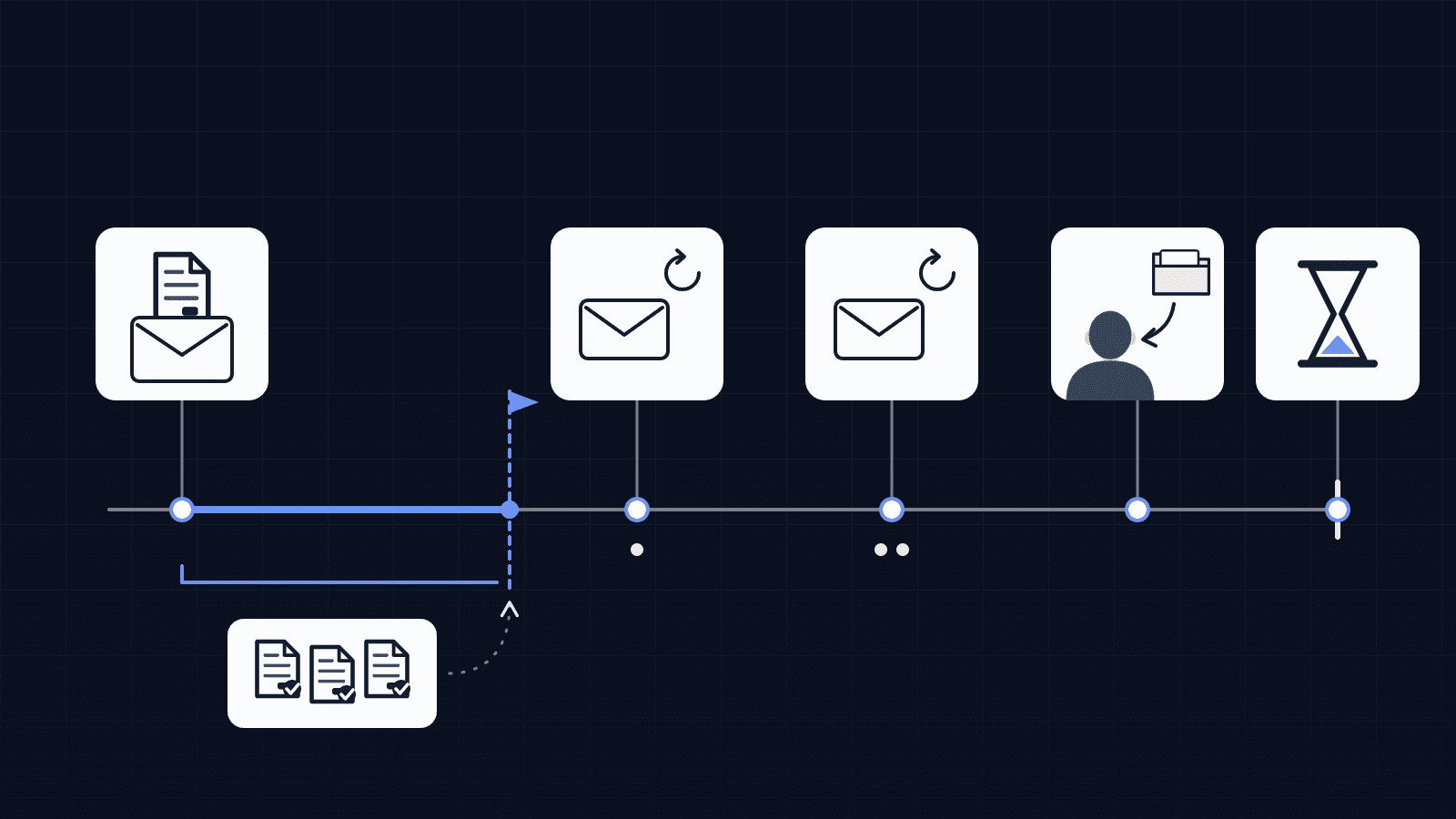
When should you follow up on a quote?
Right after the time your customers usually take to sign. Open your last six to ten signed quotes and note, for each one, the number of days between sending it and the customer's yes. Sort those durations from shortest to longest and take the middle one: that is your usual response time. A quote that goes past it with no news deserves a first follow-up; before that, you are chasing a customer who has not finished reading.
Taking the middle value protects you from extreme cases. The customer who signed within the hour and the one who took two months do not skew the result. If your quotes are very different from one another (a repair job and a project lasting several weeks, for instance), do the calculation for each type of quote: a single delay for both would be wrong for each.
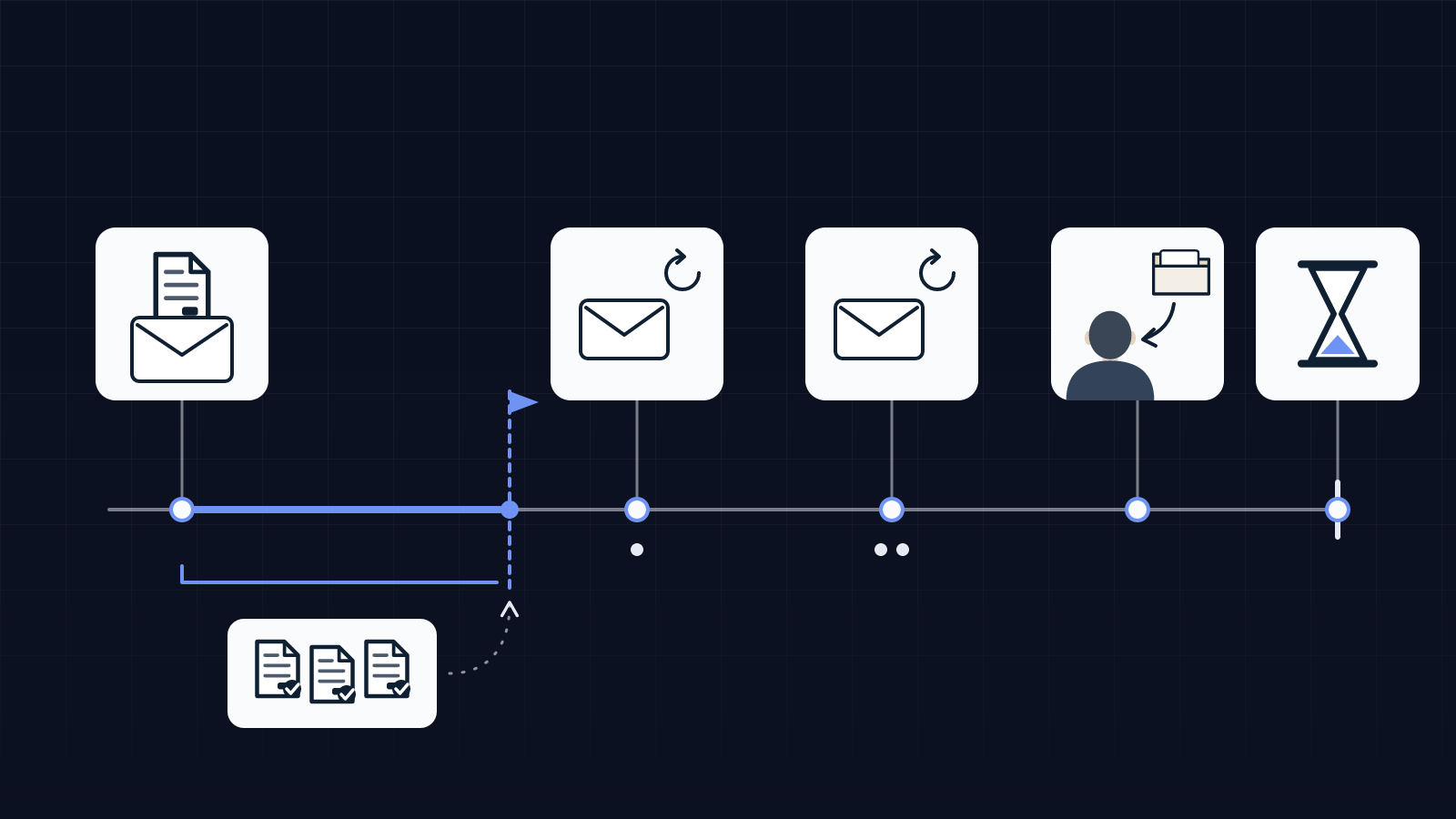
Two markers complete this delay:
- The expiry date printed on the quote. Your last contact should come before it, not after.
- The customer's own deadline, when you know it: a start date, an order to place before a cut-off, a decision meeting. It takes priority over your calculation.
What online guides suggest, and why we are wary of it
Almost all of them suggest a schedule counted in days, the same for every quote. On October 26, 2026 we read the top 10 Google results for the French query « quand relancer un devis client » (when to follow up on a client quote). Here is what they recommend.
| What the page recommends | Pages out of 10 |
|---|---|
| A schedule in days, the same for every quote (first follow-up between day 1 and day 7 depending on the page) | 8 |
| "A few days" after sending, with no number | 2 |
| A last follow-up timed against the quote's expiry date | 1 |
| A percentage on the effect of follow-ups, attributed to a study | 2 |
We asked AI assistants the same question. On October 26, 2026, asked in French for an AI agent to follow up on unsigned quotes in a small business, ChatGPT gave day 3, day 7 and day 14 as an example, and Google's AI Mode answered "3 to 7 days after sending, then spaced out". Both answers mostly pointed to follow-up software, and both suggested the same rhythm for every quote.
These schedules are not absurd: they are a starting point when you have no history yet. They are simply written for an average quote. In your business, a repair quote and a fit-out quote do not move at the same pace, and your own signed quotes show that better than a published average. As for the percentages, we do not repeat them: without the original study in hand, there is no way to know what kind of business they apply to.
How many times should you follow up on a quote?
Twice, then the deal goes back to the salesperson. That is the starting rule we suggest, and you change it if your trade calls for it. After two written follow-ups with no answer, the silence itself is information: price, timing, a competitor, a project pushed back. A third follow-up of the same kind will not tell you more; a call from the salesperson will.
| Step | When | What it gives the customer |
|---|---|---|
| First follow-up | Right after your usual signing time | A reminder of what mattered to them (timing, a constraint, an option they asked for) and a simple question |
| Second follow-up | Between the first one and the quote's expiry date | New and true information: availability, supply lead time, an option that answers an objection you heard |
| Back to the salesperson | After the second follow-up with no reply | A call, a revised proposal, or a closing message that leaves the door open |
Two rules are not up for debate. The sequence stops at the customer's first reply, whatever it is, even "I'll look at it next week". And it stops for good if the customer asks not to be contacted again.
What should each follow-up say?
Something from the file the customer will recognise, then a question they can answer in one line. A follow-up that only says "just checking in" asks them for effort and gives them nothing, and that is what makes you look pushy.
- Remind them what they asked for: "You wanted to start before the end of the month; that is still possible if we confirm this week." The sentence is only true if it is true, and the salesperson confirms it.
- Answer an objection you heard: a cheaper option, delivery in two batches, a shorter lead time on part of the job.
- Ask a closed question: "Is the quote still relevant, or has the project been pushed back?" A "pushed back" beats silence: you know when to come back.
What an AI agent prepares, and what the salesperson keeps
The agent does the work nobody has time for on a Friday: it spots the quotes that have gone past the delay, rereads the quote and the exchange before it, and drafts a follow-up that picks up what mattered to that customer. The salesperson reviews, edits and sends. This split is the one we describe on our page about automated quote follow-up.
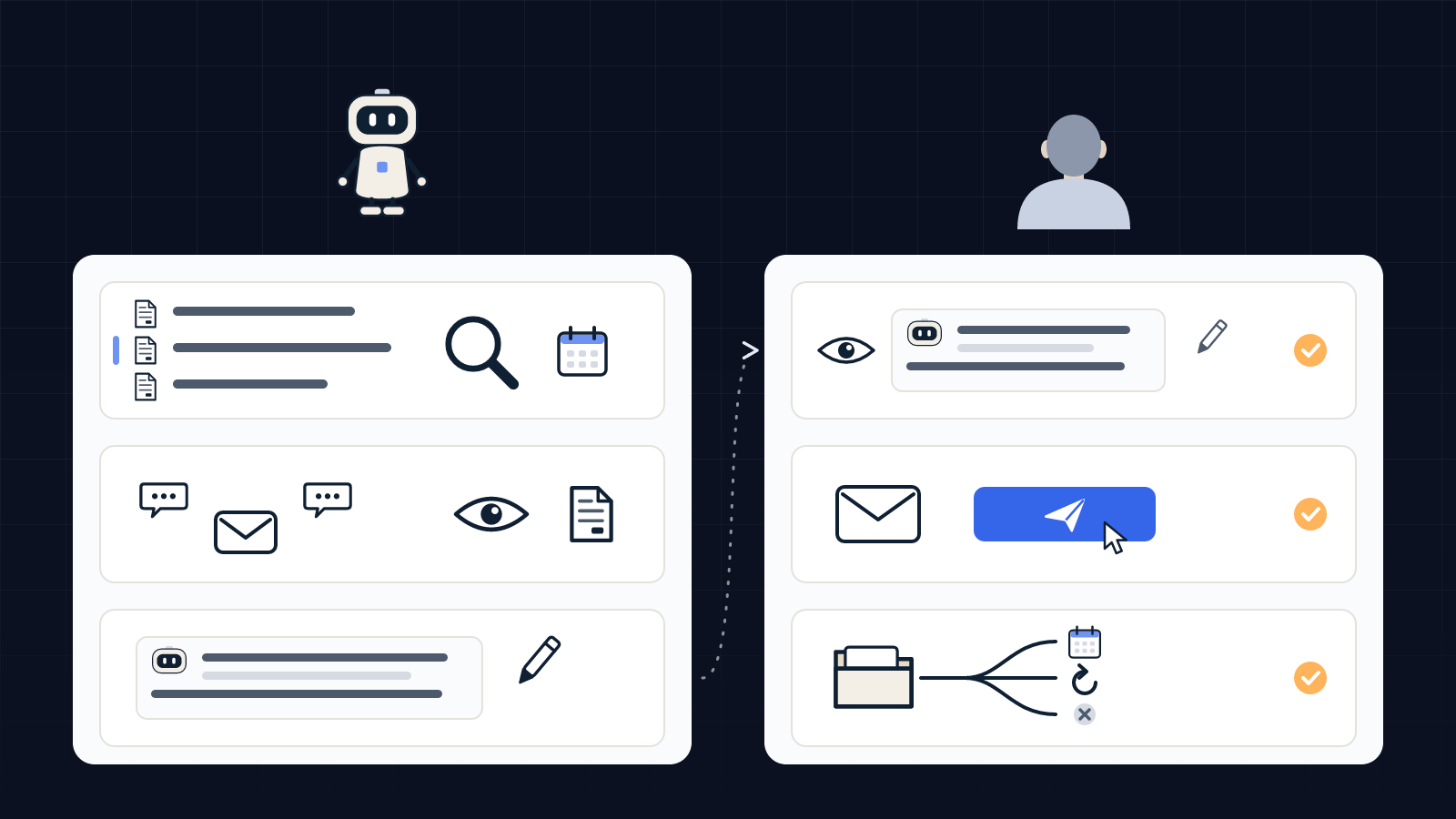
| The agent prepares | The salesperson keeps |
|---|---|
| The list of unanswered quotes, sorted by age and stakes, every Monday | The order of priority when several deals are sensitive |
| The usual signing time, recalculated from your latest signed quotes | The choice of delay applied, by type of quote |
| The text of each follow-up, based on the quote and the previous exchange | The final text and the sending |
| Stopping the sequence at the first reply | What happens after the reply: call, revision, closing |
| The CRM note: what was sent, when, and what the customer said | The status of the deal: won, lost, on hold |
We apply this rule to ourselves. Our prospecting agent follows up four to five days after the first message, only once more after that, and stops as soon as someone replies or asks not to be contacted again. Its figures are published in our article on what an AI sales agent prepares. That delay is for prospecting; for your quotes, your own history sets it.
Do you need an AI agent to follow up on quotes?
Not always. If your quotes are all of the same kind and your only problem is forgetting, a fixed rule is enough: a list of pending quotes every Monday and a reminder on a set date. Your quoting tool or CRM may already do it. An agent earns its place when the follow-up has to reread the file to say something useful, or when there are too many different quotes for one person to remember.
If your quotes are still written by hand from requests that arrive by email, follow-up may not be the first task to hand over: handling incoming quote requests often comes first. To decide, our AI assessment reviews your tasks and tells you where to start.
FAQ
Should you follow up on a quote by phone or by email?
Use the channel the customer has used with you so far. A customer who asked for the quote over the phone often picks up more readily than they answer an email; a buyer who only writes will prefer a short message. The agent can prepare both: the email text, or two sentences to say on the phone with a reminder of the file.
What if the quote has already expired?
Do not chase the old document: send an updated quote. Prices, lead times or availability may have changed, and a customer who signs an expired quote puts you in a difficult position. The follow-up becomes a new proposal, prepared and checked with more care.
Can an AI agent send the follow-ups on its own?
Technically yes, and we advise against it at the start. During the trial period, the agent prepares and the salesperson sends. A neutral reminder sent on a fixed date can be automated later if you decide so; a follow-up that draws on the file stays reviewed.
How many more signed quotes can you expect from better follow-up?
Nobody can tell you before measuring it in your business, and we give no figure. What you can measure right away is the share of your quotes actually followed up on the planned date. That is the number to track first.