Construction companies · SMEs

AI agent for construction SMEs: tenders, quotes and paperwork prepared, you approve

In a small construction company, the office receives tender invitations from main contractors, quote requests, requests for administrative documents and messages about progress invoices every week. An AI agent reads each message, links it to the right client or site, and prepares the next step: a tender summary, a draft quote built from your price library, the requested document, the follow-up. Someone on your team reviews and approves: nothing goes to a client or a main contractor without them. Équipage IA scopes and sets up this agent for SMEs in France and the Île-de-France region, starting with a discovery audit.

Twenty to thirty minutes. No commitment.

What does an AI agent do in a construction SME?

It takes on the written work that waits for the site manager or the office assistant in the evening. For each incoming email, it identifies the sender (private client, main contractor, project manager, supplier), recognises the type of message and reads the attachments: tender file, drawings, technical specifications, purchase order, progress invoice request. It extracts what you need to decide: the type of work, the trade package, the site address, the submission deadline, the documents requested. Then it prepares: a tender summary to decide on, a draft quote using your own items and prices, the list of documents to attach, a reply to review. Everything lands in an approval list, with the original message alongside. The agent never sets a price, a margin or a deadline: it prepares, a person decides.
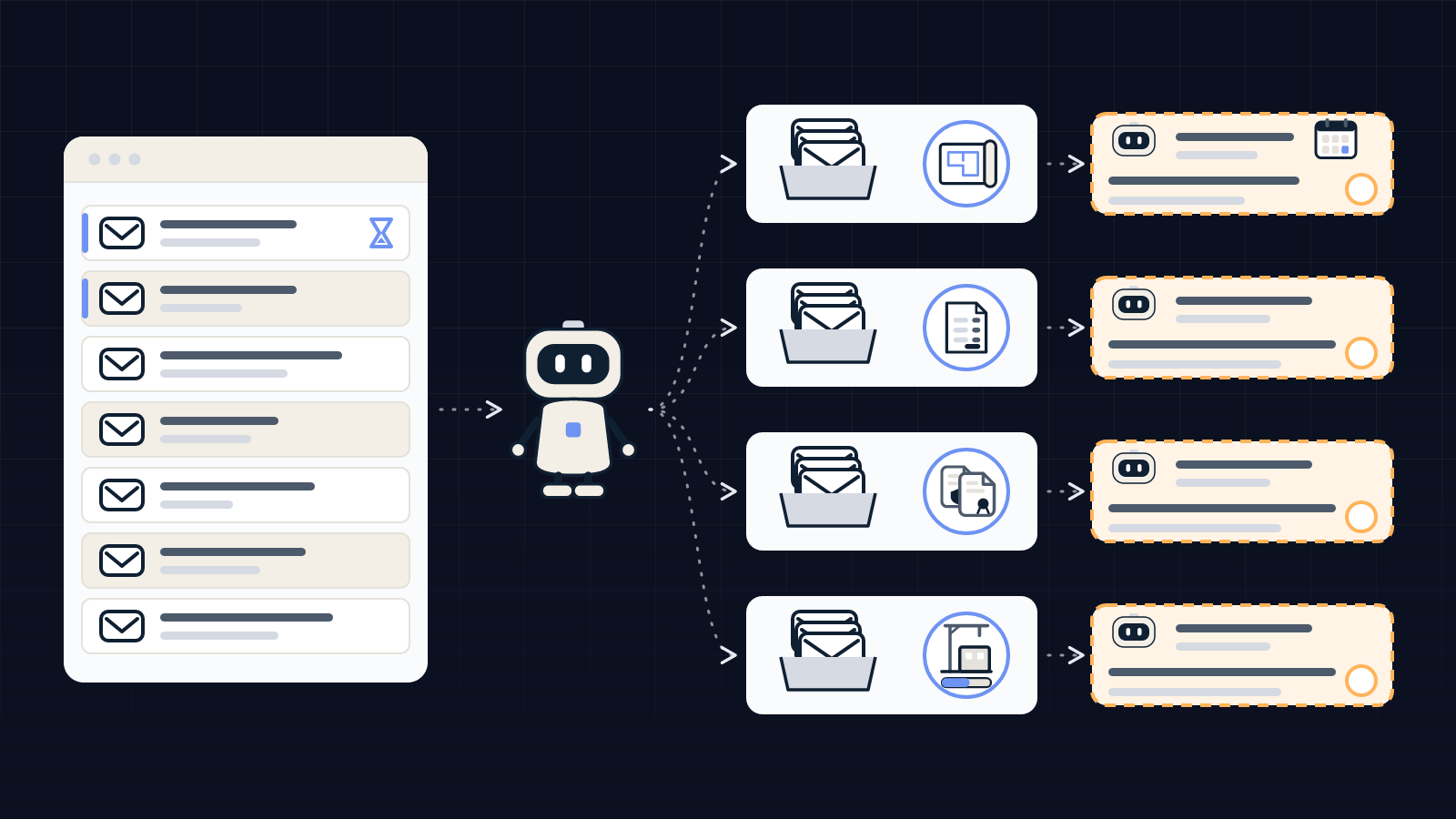
Inbox of a small construction company where an AI agent sorts each email into tender invitation, quote request, document request or progress invoice, with the deadline shown.

If you are a tradesperson working mostly for private clients, our page on the AI agent for building tradespeople starts from your enquiries and the mandatory quote mentions. This page is for SMEs that also work for main contractors and project managers.

Tender, quote, documents, progress invoice: the agent sorts before it prepares

Most AI tools for construction start from the site visit and the dictated quote. In an SME that works as a subcontractor, the office receives other messages, and each one calls for different preparation and a different decision.

Message receivedWhat the agent preparesWhat you decide
Tender invitation from a main contractorA summary: trade package, address, deadline, documents in the file, specification points that affect your trade, questions to askWhether to bid, and with what offer
Quote requestA draft quote from your items and prices, with points to check on siteQuantities, price, discount, sending
Request for administrative documentsThe list of documents requested, those up to date in your files and those missing or expiringSending the documents and any request to your accountant or to URSSAF
Progress invoice requestA draft progress statement from the progress you recordedThe progress figure retained and sending
Unanswered quoteThe list of quotes to follow up and the follow-up messageFollow up, wait or close

Quote preparation is covered on our page about the AI agent for enquiries and quotes, and following up unanswered quotes on the quote follow-up page.

Which documents can a main contractor ask for, and when?

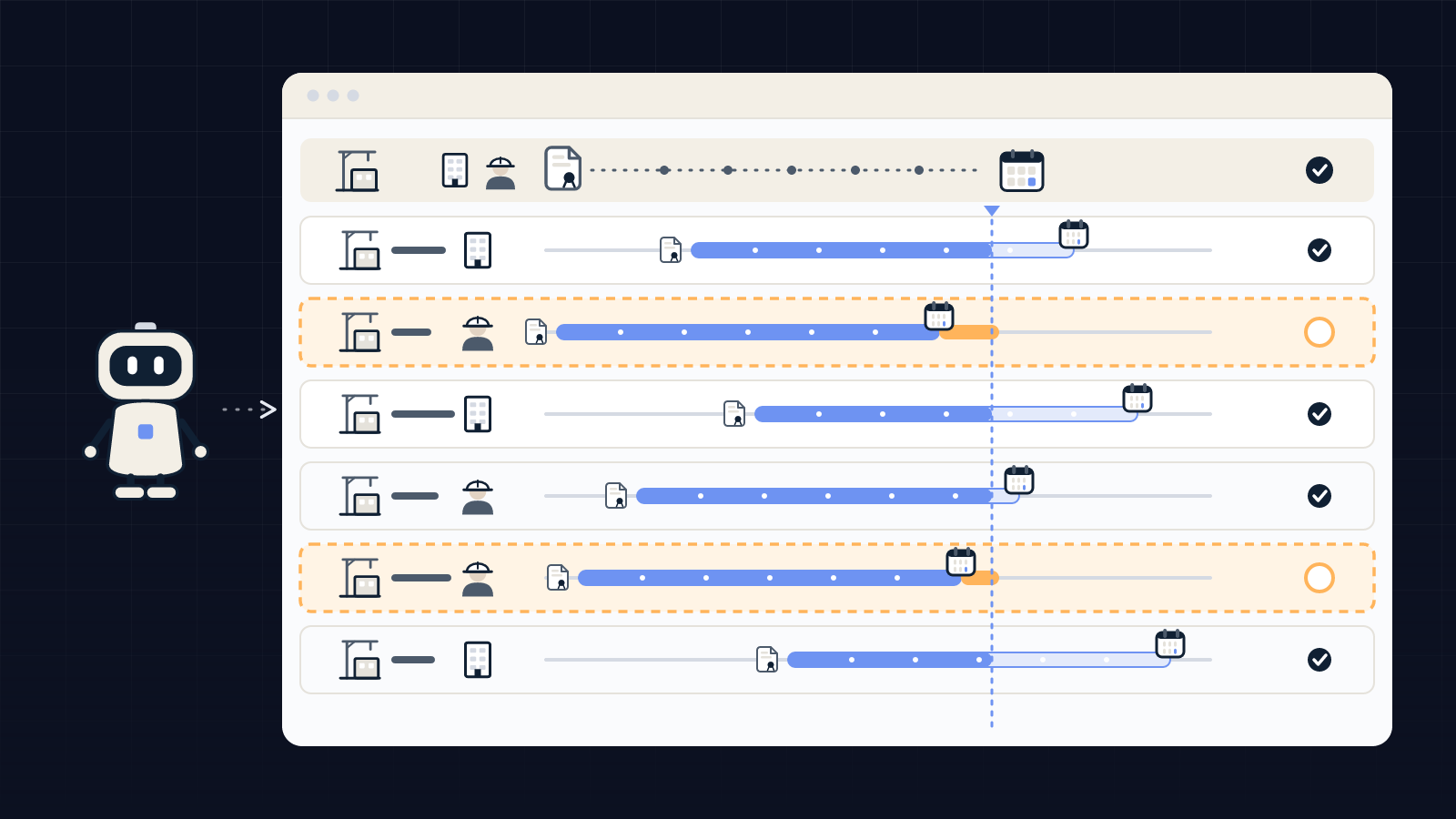
The one most closely tracked in France is the vigilance certificate issued by URSSAF. For any contract of at least €5,000 excluding tax, the client must check at signature, then every 6 months until the contract ends, that its contractor is up to date with its social security filings and payments; the subcontractor provides this certificate for that purpose (URSSAF, page read on 4 November 2026; Service Public Entreprendre, read on 4 November 2026). A construction SME is often on both sides: it provides its certificates to its clients and requests those of its own subcontractors.

Tracking table of a construction SME's administrative documents: for each main contractor and subcontractor, the date of the last vigilance certificate and the next six-month deadline, with late items flagged in orange.

The agent keeps this calendar in a table you can see: for each contract, the date of the last certificate received or sent and the next deadline. It drafts the requests to your subcontractors and flags to your team the documents a client is waiting for. It does not log in to your URSSAF account and downloads nothing on your behalf: that step stays with someone in your company or with your accountant. Nor does it give legal advice on a contract.

What always stays with a person

In construction, margin and liability depend on decisions the agent does not take alone. We write them down during scoping, and the agent always hands them back to someone:

  • Whether to bid: the agent summarises, you judge whether the job is worth pricing.
  • Price, margin and discount: it uses your library prices and flags anything missing.
  • The promised date: it recalls the deadline and your known schedule, a person commits.
  • Administrative documents: it says what is missing; obtaining and sending them stays with your team.
  • Sending: no quote, progress statement or follow-up goes out without approval.

What we learned running our own agents

We do not yet have a construction company among our clients, and we say so. What we know comes from how we work ourselves: at Équipage IA, an administrative agent prepares our quotes and invoices in our invoicing tool, and sending to the client always waits for the founder's approval. Three rules come out of it, which we would apply with you:

  • Every proposal says where it comes from. A quote line cites the item in your library; a deadline cites the document received. Review is faster when the source is in front of you.
  • Anything doubtful is reported as doubtful. An unreadable drawing or an item missing from the library is flagged, never guessed.
  • Approval is written into the scoping. It does not depend on the agent's goodwill: it is part of its workflow.
Approval screen where the site manager reviews the draft quote prepared by the AI agent, each line linked to the item in the price library, and approves it before sending.

When an AI agent is not useful in a construction company

Sometimes the right answer is to build something simpler, or nothing:

  • you receive few tender invitations and someone already handles them the same day;
  • your need is to price quickly from the site: dictation-based quoting software does that without a custom agent;
  • your item library and prices are not written down reliably anywhere: that is the first job, before any agent;
  • tracking your administrative documents fits in a calendar reminder: a fixed rule is enough.

The discovery audit is there to decide: fixed-rule automation, an AI agent, or nothing worth building. We give no figure for hours saved before we have seen your messages: the gain depends on your volumes, your formats and the state of your price library.

How does Équipage IA set it up?

  1. The discovery audit. We look with you at a typical week in the office inbox, your tools and the decisions that must stay human.
  2. Scoping. For each type of message, we write what the agent prepares, what it flags and what it leaves alone.
  3. Go-live. The agent starts read-only; its first weeks produce proposals that your team reviews.
  4. Follow-up. We adjust the rules to the cases that come up, and we measure the before and after with you.

To know which task to start with, our AI diagnostic asks the right questions.

FAQ

Can an AI agent read a full tender file?

It reads the written documents in the file (rules, specifications, bill of quantities) and produces a summary: trade package, deadline, documents to provide, points that affect your trade. Drawings are flagged for review; the decision to bid stays with you.

Does the agent replace our quoting software?

No. It works with the software and price library you already use. If your software offers no official access, we tell you during the audit instead of working around it.

Can it request our certificates from URSSAF for us?

No. It tracks deadlines, drafts requests to your subcontractors and flags the documents your clients are waiting for. The request to URSSAF stays with someone in your company or with your accountant.

Do we need a dedicated email address for tenders?

It is not required. The agent can read the office inbox and sort what is a tender, a quote, a document request or a progress invoice; scoping sets which inboxes it reads.