What does e-invoicing actually change for a small business?
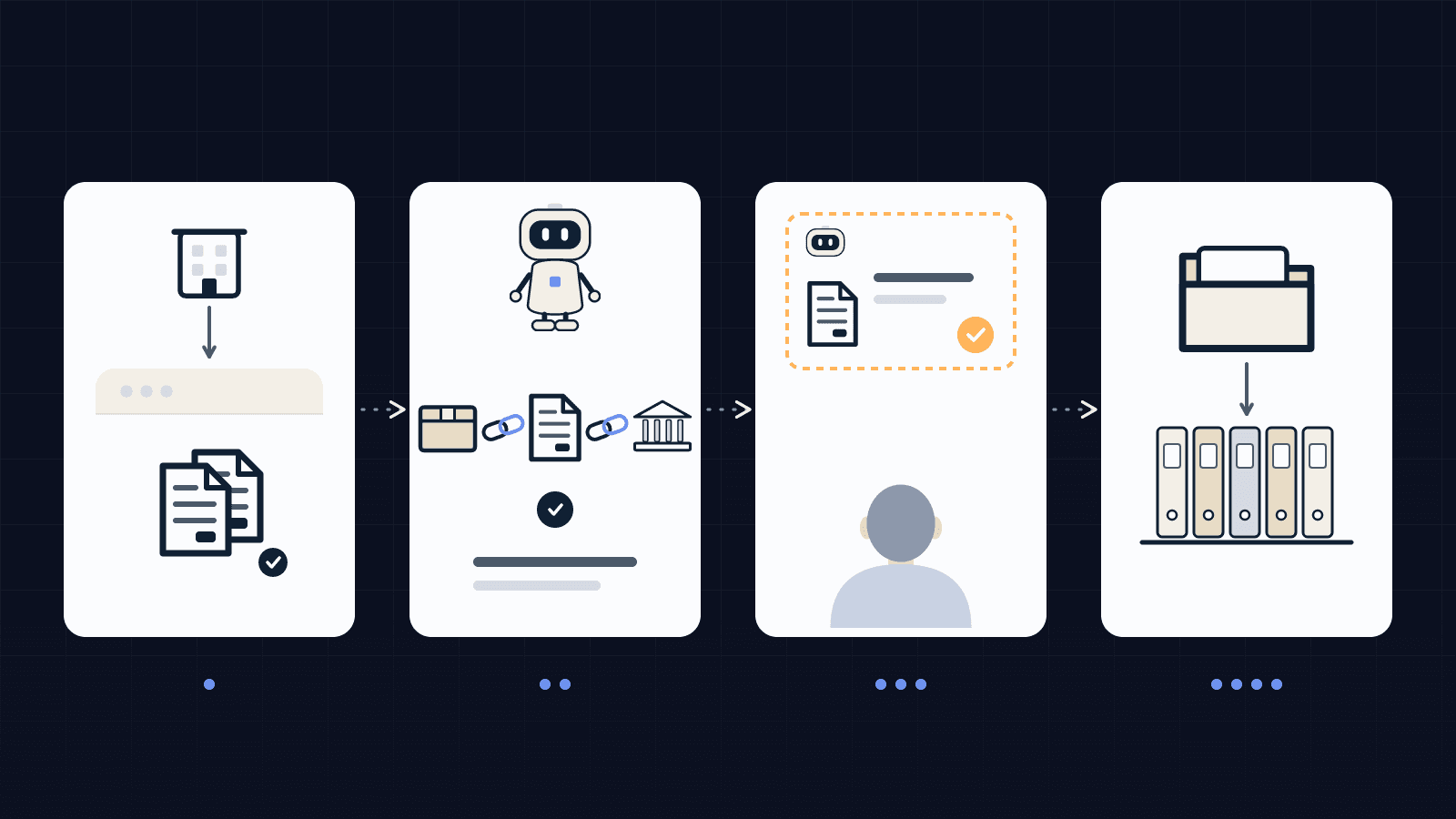
It changes how part of your invoices arrive. In France, where our agency is based, every VAT-registered business has had to be able to receive electronic invoices since September 1, 2026, through an approved platform that receives and forwards invoices on its behalf. Small and mid-sized businesses will have to issue them from September 1, 2027. The scope is invoices between VAT-registered businesses established in the country; sales to consumers and cross-border transactions go through a separate reporting channel.
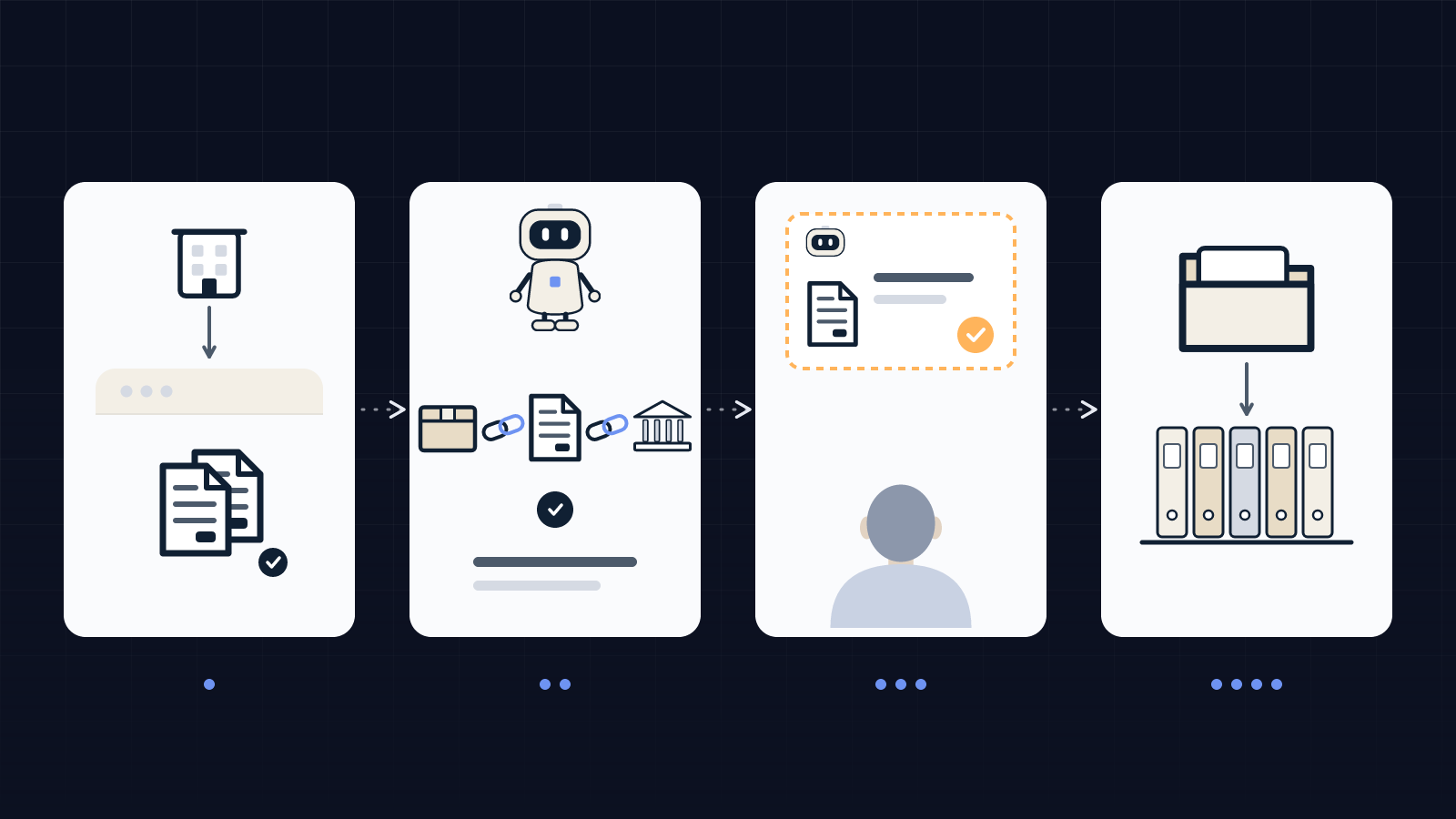
In practice, a small business now receives some invoices in a structured format, and everything else keeps arriving as before: PDFs by email, receipts in an online account, bank statements.
Does e-invoicing remove manual invoice processing?
Partly. A structured invoice comes with its data (supplier, amounts, tax, date) already readable, with no text recognition on a PDF. Retyping goes away. What remains is everything that requires comparing two sources: does the invoice match what was ordered and delivered? Does the bank payment match the invoice? Did a subscription go up without notice?
Then there are the documents that never enter the system. A subscription paid to a software vendor abroad, an online ad platform, currency conversion fees charged by your bank: each needs a receipt, and none will come through the approved platform. We cover the rest of this preparation work in our article on what to hand to an AI accounting agent.
What we found across 22 runs of our own agent
At Équipage IA, an agent matches the debits on our business bank account with the invoices we receive almost every day, and attaches the receipt when the match is certain. We reread its 22 logs, from October 9 to November 6, 2026. Over that period, it attached 4 receipts on its own. For everything else, it produced the list of what was missing, with the reason for each line and where to find the document.
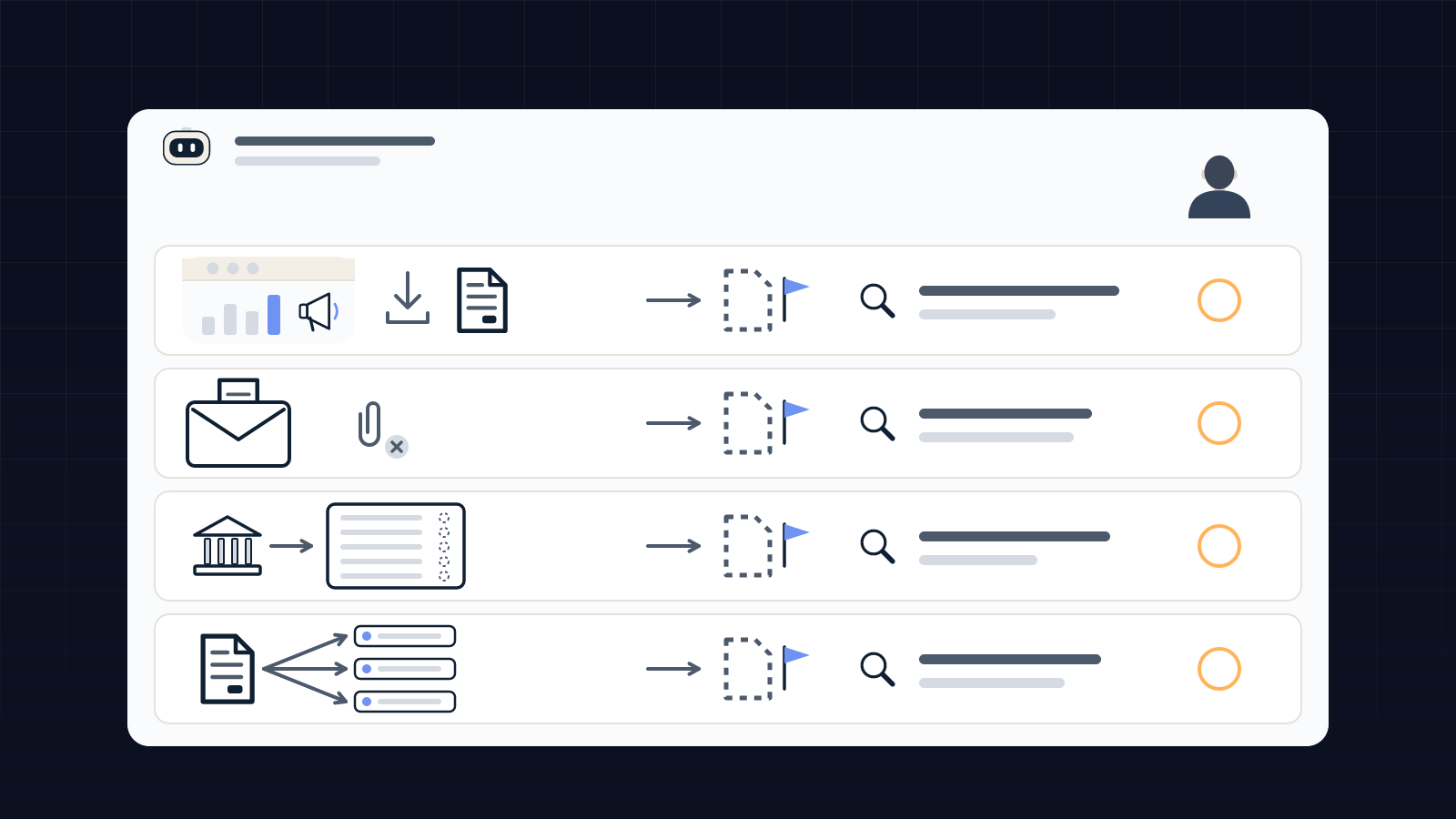
The October 30, 2026 log says it best: 30 debits without a receipt since September 1. 21 were currency conversion fees charged by the bank, with no invoice per line. The other 9 were supplier invoices that none of the inboxes the agent read contained. The other runs show the same causes:
| Why the receipt was missing | What the agent did | Who finished the job |
|---|---|---|
| Invoice only available in an ad platform's account | Spotted the debit, said where to download the invoice | The owner, who downloaded it |
| Receipt sent in the body of an email, with no attachment | Found the email, matched it to the debit | The owner, who saved the receipt |
| One invoice for several payments | Flagged that the total had to be split | The owner or the accountant |
| Invoice in a foreign currency, debit in euros | Proposed the match without attaching it | The owner, who confirmed |
| Bank fees with no invoice per line | Grouped the lines and pointed to the monthly bank statement | The owner, with the accountant |
Two lessons for a small business. First, the agent only attached what it was sure of, which is what you want: a receipt filed against the wrong payment costs more than a receipt flagged as missing. Second, none of these causes goes away with e-invoicing, because none of them goes through an approved platform. The value is in the list: every morning, you know exactly what to fetch, and where.
What an AI agent handles once the invoice arrives
Once an invoice arrives, electronic or not, the agent works inside your tools (inbox, bank, invoicing software, e-invoicing platform) following rules written with you:
- it matches each invoice to the corresponding payment and flags amount differences;
- it compares the invoice to the order or quote when those documents exist;
- it spots debits with no receipt and says, line by line, where to find it;
- it drafts requests to suppliers who have not sent their invoice, which you approve before they go out;
- it files the documents and prepares the monthly pack for your accountant.
Before giving it access to your bank or inbox, decide what it can read, what it can do alone and what waits for your approval. We explain that method in how to give an AI agent access without losing control.
What stays with you and your accountant
Three things are not delegated. Paying a supplier stays a human decision, made in your bank. Rejecting a disputed invoice is your call, with the order history in front of you. Keeping and reviewing the books stays your accountant's job: the agent works upstream of the firm, not in its place.
| Task | The AI agent | You or your accountant |
|---|---|---|
| Receive the invoice | Reads it in the platform or the inbox | Choose the e-invoicing platform |
| Check the invoice | Compares it to the order and the payment | Decide when something does not match |
| Missing receipt | Spots it and drafts the request | Approve the request, download what is outside the system |
| Pay | Prepares the list of due dates | Pay, always |
| Bookkeeping | Prepares the monthly pack | Keep and review the books |
Where to start this week
- Check that your business can receive electronic invoices where your country requires it.
- List the spending that will never go through that system: foreign software subscriptions, online ads, bank fees.
- Look at your last closed month: how many bank lines ended up with no receipt, and why?
- Decide what an agent could prepare and what must stay with you; our page on the AI accounting agent sets out the scope we put in place.
If your software already matches invoices and payments without errors, an agent will mostly help with missing receipts and reminders. If you receive few invoices, a well-kept spreadsheet is enough, and the audit will say so. Once it is running, an agent is followed like a new team member: see supervising an AI agent after launch.
FAQ
Can AI process invoices for a small business?
Yes, within limits you set. An agent reads incoming invoices, matches them to orders and bank payments, and flags differences and missing receipts. Payments and disputed invoices stay with you.
Is a PDF sent by email an electronic invoice?
Under the French reform, an electronic invoice goes through an approved platform that receives and forwards it on your behalf. A PDF attached to an email remains a document to match, by hand or by an agent.
Can an AI agent replace an e-invoicing platform?
No. Where a platform is required, it is the official channel for receiving and issuing invoices. The agent works next to it: it reads what the platform receives, compares it to your orders and your bank, and prepares the next step.
Do invoices from foreign suppliers go through the platform?
In France, e-invoicing covers transactions between VAT-registered businesses established in the country. An invoice from a supplier abroad keeps arriving as before, by email or in an online account, and still has to be matched.
Sources: "La facturation électronique est effective depuis le 1er septembre 2026", Service Public Entreprendre, published September 2, 2026, accessed November 10, 2026 · E-invoicing reform FAQ, impots.gouv.fr, accessed November 10, 2026 · Logs of Équipage IA's receipt-matching agent, 22 runs from October 9 to November 6, 2026 (internal record, no client involved).