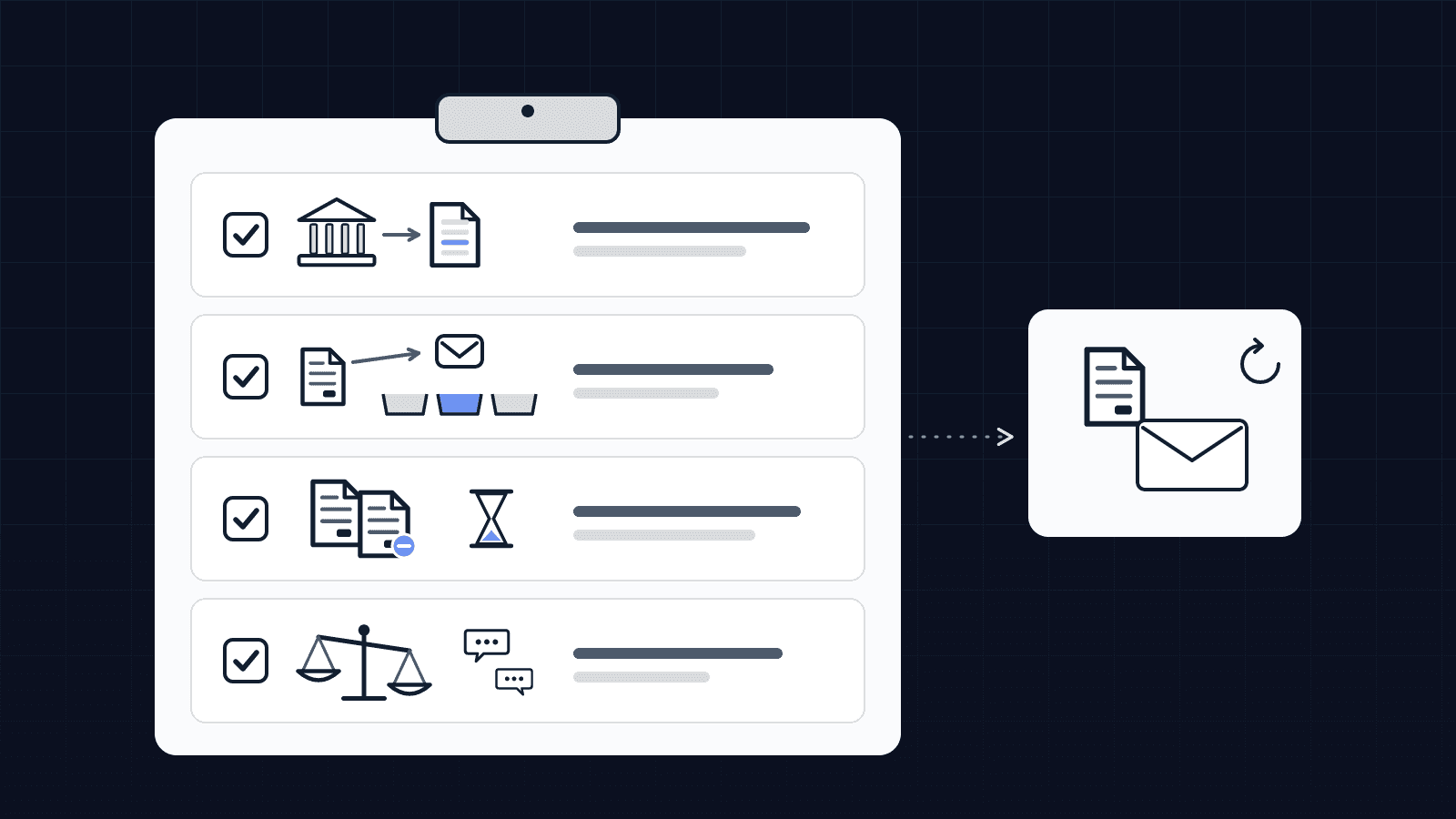
When should you send an overdue invoice reminder?
An invoice is overdue the day after its due date, and nothing requires you to wait before reminding the client. Payment terms vary by country and sector; in France, for example, terms between businesses generally run from 30 to 60 days (French government guide to amicable debt recovery, reviewed 27 November 2024, read 3 November 2026).
The right moment mostly depends on the client. Open your invoicing tool and look at their last six to twelve paid invoices: due date, payment date. A client who always pays five days late sends no signal on day three. A client who always paid on time and has not this time sends one the very next day. So the first reminder goes out when the delay exceeds that client's habit; for a new client with no history, it goes out right after the due date.
The same calculation tells you which clients need a friendly nudge before the due date. It is the logic we use for following up on an unsigned quote: start from what your clients actually do, not from a date read in a guide.
What should you check before the first reminder?
Four checks prevent most pointless or awkward reminders. Run them before the first message, not after.
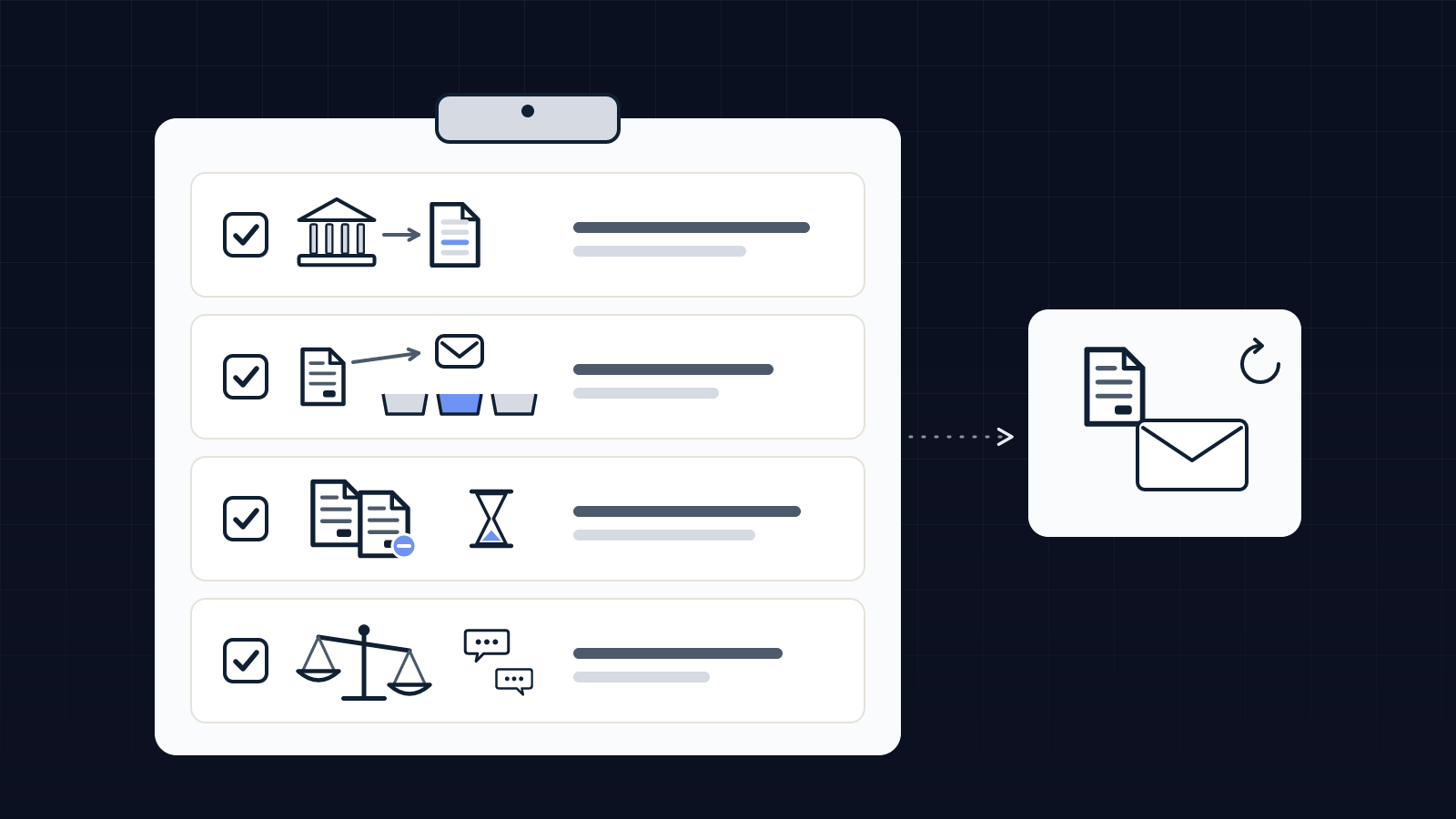
- The payment has not already arrived. Match the bank statement before reminding anyone: a transfer received yesterday, or a partial payment, changes the message.
- The invoice reached the right place. Correct billing address, correct department, purchase order number when the client requires one. Some business clients hold any invoice that lacks it, without telling you.
- No credit note or complaint is pending. Chasing an invoice your own team is correcting damages the relationship for nothing.
- The client is not in dispute. When non-payment comes from a disagreement, a reminder does not help: the disagreement has to be settled first. That is a human decision.
At the same time, tell whoever handles this client on the sales side. An open reminder is not the moment to accept a new order with longer payment terms.
How many reminders, and in what tone?
Two reminders are enough in most cases; after that, the decision moves to a formal demand for payment. Each message should give the client something new: the invoice attached, the purchase order number, a payment link, a precise question. A message that only says "just following up" helps nobody pay.
| Step | When | Channel | What the message adds | Who decides |
|---|---|---|---|---|
| Pre-due-date nudge | A few days before, for clients who usually pay late | The invoice, the due date, payment details | A rule you have approved | |
| First reminder | When the delay exceeds the client's habit | Email, phone call for a key account | Number, amount, due date, and the question "did the invoice reach you?" | You, or an approved rule for simple cases |
| Second reminder | No answer and no payment after the first | Email, then a call | A request for a payment date, a reminder of the invoice's payment terms | You |
| Formal demand | When reminders have no effect | Registered letter, or the legal route that applies in your country | A formal, unambiguous demand for payment | You, always |
Keep a record of every reminder: date, channel, answer. If the case goes to a formal demand or to court, this log is part of the file. In France, a reminder is not even a required step before a formal demand; check the rule that applies to your own contracts.
What can an AI agent do for overdue invoices?
An AI agent works inside your invoicing, banking and email tools, following rules written with you. For overdue invoices, it tracks each due date, matches incoming payments, calculates each client's usual delay and flags the invoices that break that pattern. It runs the four checks above before drafting anything, sets sensitive cases aside (dispute, pending credit note, key account) and, for the others, drafts a reminder that reflects the client's history. It also keeps the reminder log. It does not send formal demands, does not decide to charge late fees and does not answer a dispute: those decisions stay with you. We cover this split in our article on what you can hand to an AI accounting agent.
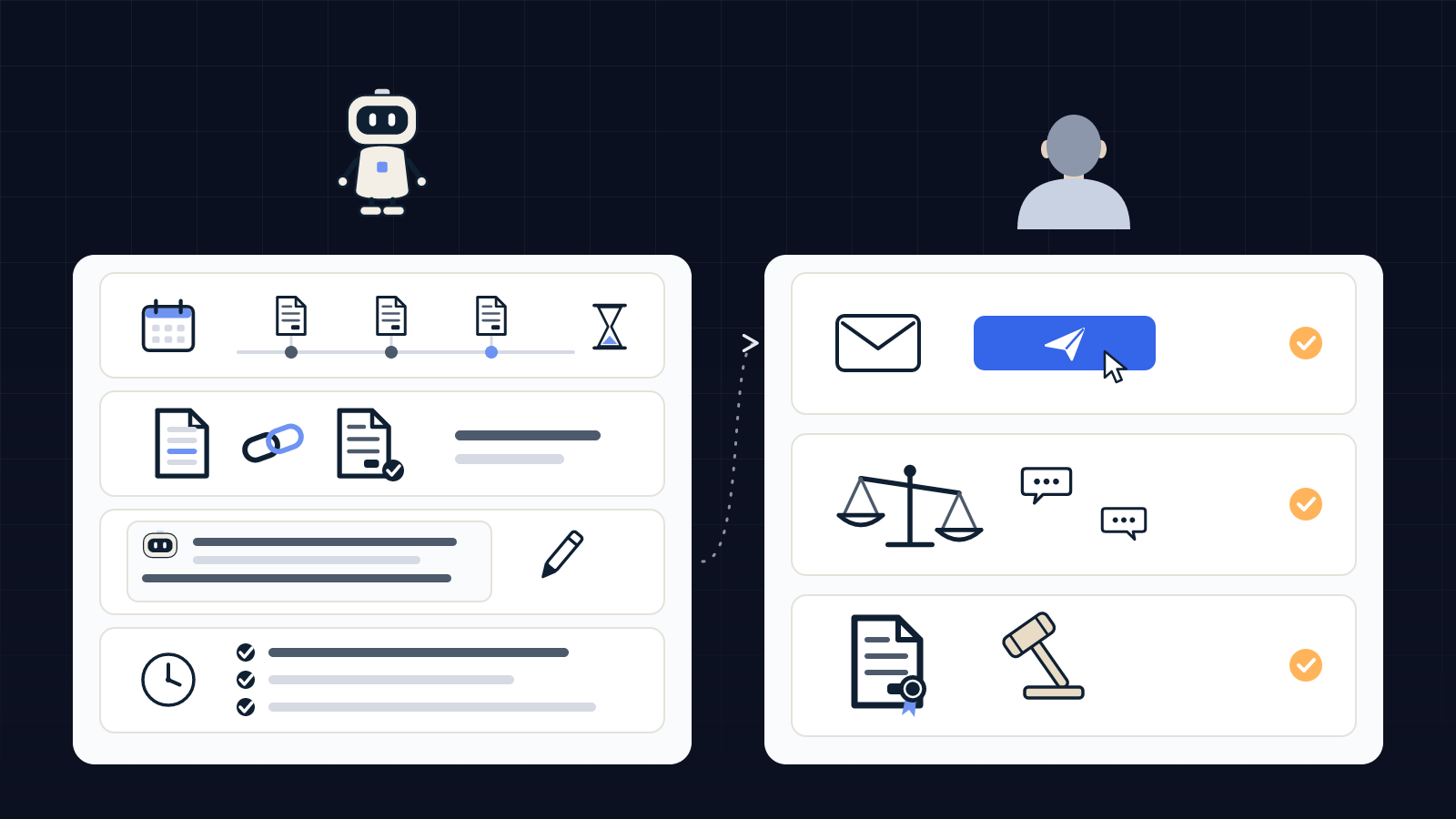
In our own agency, the agent in charge of invoicing creates and updates invoices in our banking tool, but nothing is sent to a client without the owner's approval. That is the setup we suggest for reminders too: the agent prepares, a person approves. To decide what an agent may read, prepare or send, see our article on scope and approval for an AI agent.
Your software's automatic reminders or an AI agent: which one?
If your invoices look alike and your clients pay through a single channel, the reminder sequence built into your invoicing software is enough: you do not need AI to send the same nudge on a fixed date. An agent becomes useful when a reminder means rereading the file: several contacts at the client, purchase orders to match, partial payments, pending credit notes, or payment habits that differ widely from one client to the next. Our automation page explains how we choose between a simple rule and an agent.
FAQ
How soon after the due date can I send a reminder?
The day after the due date. The more useful question is how late this particular client usually pays, which you can read from their last paid invoices.
Should I chase a client who disputes the invoice?
No. When non-payment comes from a disagreement, a reminder does not help: settle the dispute first. That decision belongs to a person, not to a reminder sequence.
Is a reminder required before a formal demand for payment?
In France, no: a reminder is not a prerequisite for a formal demand or a court claim. Rules differ by country, so check the procedure that applies to your contract.
Can invoice reminders be fully automated?
Standard reminders, yes, under a rule you have approved. Sensitive cases, no: disputed invoices, pending credit notes, key accounts and formal demands go back to a person.
Sources: payment terms, reminders not mandatory, disputes and formal demand, "Recouvrement amiable : relance et mise en demeure de payer", Service Public Entreprendre (French government), page F38586, reviewed 27 November 2024 (entreprendre.service-public.gouv.fr, read 3 November 2026) · review of the first page of Google France for "relancer une facture impayée", 8 organic results, 3 November 2026, with full reading of the Pennylane, Indy and Defacto guides the same day · review of the first page of Google US for "overdue invoice reminder", 8 organic results, 3 November 2026.